What are our feelings upto - A story of resistance to genocidal narratives
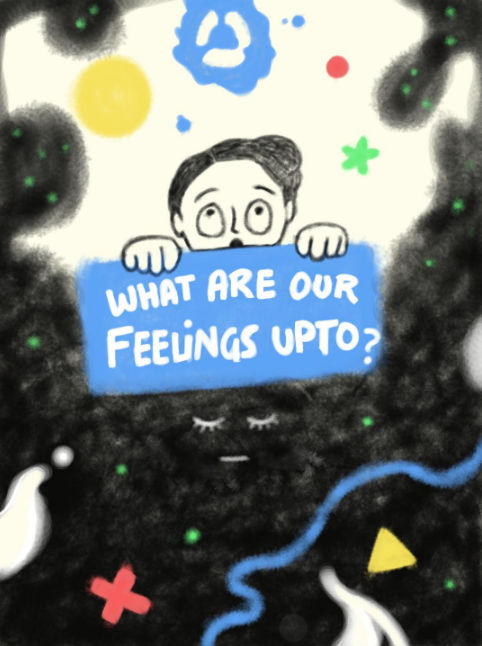 A book written by the CBA community
What did CBA do when they found that a book they were planning to read, the author, supported genocide and hate? - they decided to write their own book as an act of resistance. Around 25 people came together on a Sunday morning to explore and express what our feelings are up to. And to show up for a cause that challenged the dominant stories.
Shalini and Vani facilitated this reading with grace and poise. They started with a grounding exercise which helped centre everyone on a feeling that was prominent for them. Each member drew two pages of the book. And all these beautiful canvases were weaved together in a PDF which was then read in the usual CBA style.
Two prompts guided the entire book writing process, what do our feelings do when they are acknowledged and what do our feelings do when they are not acknowledged. Everyone was asked to focus on a feeling, and asked to centre that feeling around these prompts and then draw what came up for them - express it in whatever form they wanted.
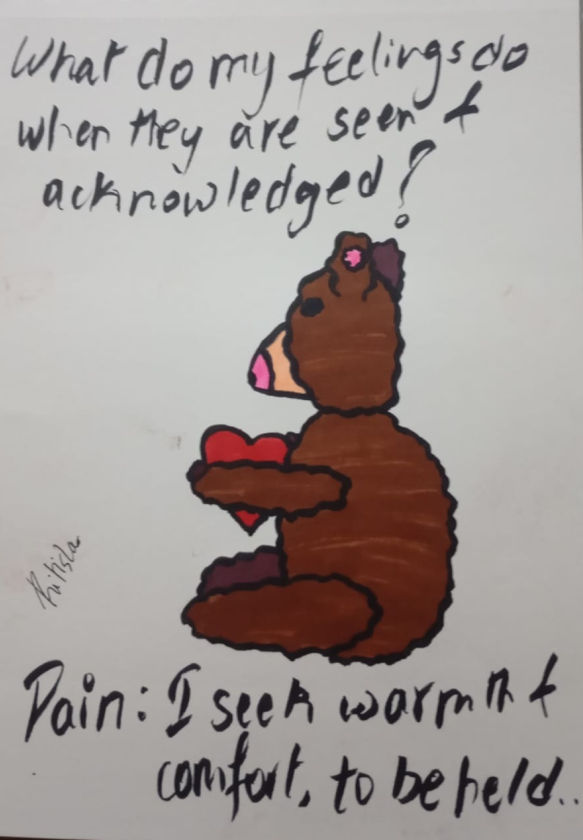 A page from the book
A rainbow of feelings came up from everyone’s drawings - joy, shyness, grief, anger, love, sadness, and everything in between. During the reading, participants resonated with each other’s drawings, evoking emotions of love and solidarity.
“The glow and warmth of it all. I don’t remember the last time I felt this much Love”
One of the pages of the book depicted grief when not acknowledged hit like a brick from all sides, and when acknowledged those bricks turned into a heart as if “my grief is now in a container of love”.
“There is so much joy in being held in our grief”
One of the participants reflecting on how the whole process brought out so much vulnerability in everyone said - “Holding all the vulnerability close to my heart”.
At the end we read the acknowledgements of the book written by Anjali Ramesh. It covered the intention behind co creating this book with everyone.
“You cannot have conditional feelings and emotions when it comes to human rights!” - reflected on of the participants.
This co-creating and reading was not just an ordinary reading, it was an act of resistance against normalization of genocidal narratives. It was a commitment to boycott and divest from anyone who actively supports a genocidal regime and annihilation of human rights. It was collective solidarity in action.
- Written by Ishada