Love, Celebration and Making Room: In a beautiful union of two souls
 Swati
Swati  A book celebrating Queer Union
Reading Ritu Weds Chandni together felt a little like being welcomed into someone’s celebration. It was as if the story invited us to sit close enough to notice the small moments that often give such gatherings their meaning. As the pages unfolded, a world appeared that felt familiar. There were preparations, colours, laughter, relatives moving through the house, and the quiet anticipation that often accompanies a wedding.
In these moments we found ourselves spending time with Ritu and Chandni.
And with the love that lives between them.
Something about the way their relationship is held in the story seemed particularly gentle. Their love does not appear as something that needs to be defended.
Or explained.
It simply takes its place within everyday life.
Among rituals, conversations, and shared moments of joy.
During the reading, this quietness seemed to move many of us. It carried a sense that love can sometimes be most powerful when it is simply allowed to be present and visible.
Spending time with the story also drew our attention to the wider social and cultural worlds within which marriages take place. In many of our contexts, marriage carries meanings that reach far beyond two people. It is often closely tied to ideas of family, tradition, community recognition, and belonging. Because of this, some forms of love have historically been more easily recognised in these spaces, while others have found themselves meeting hesitation, questions, or uncertainty.
As we reflected together, it felt difficult not to think about the ways queer relationships continue, in many places, to encounter these kinds of responses. These realities seemed to form part of the social world that surrounds a story like this.
At the same time, other stories also came to mind. Stories of people continuing to love and live even when the spaces around them have not yet fully opened. Stories of families slowly shifting their understandings. Stories of communities finding ways to celebrate lives that were once asked to remain unseen.
What began to stand out for us was the way Ritu Weds Chandni seemed to hold these different realities together. The story moves gently within the familiar world of weddings and family celebrations while also making space for a love that might not always have been recognised within those traditions.
In doing so, it quietly opens a possibility.
A possibility for imagining these spaces as capable of holding more than they sometimes have.
Within its pages we could recognise the rhythms of weddings and family gatherings that many of us know. At the same time, the story seemed to suggest that these spaces are not as fixed as they sometimes appear.
They can widen.
They can make room for loves that were once considered outside their boundaries.
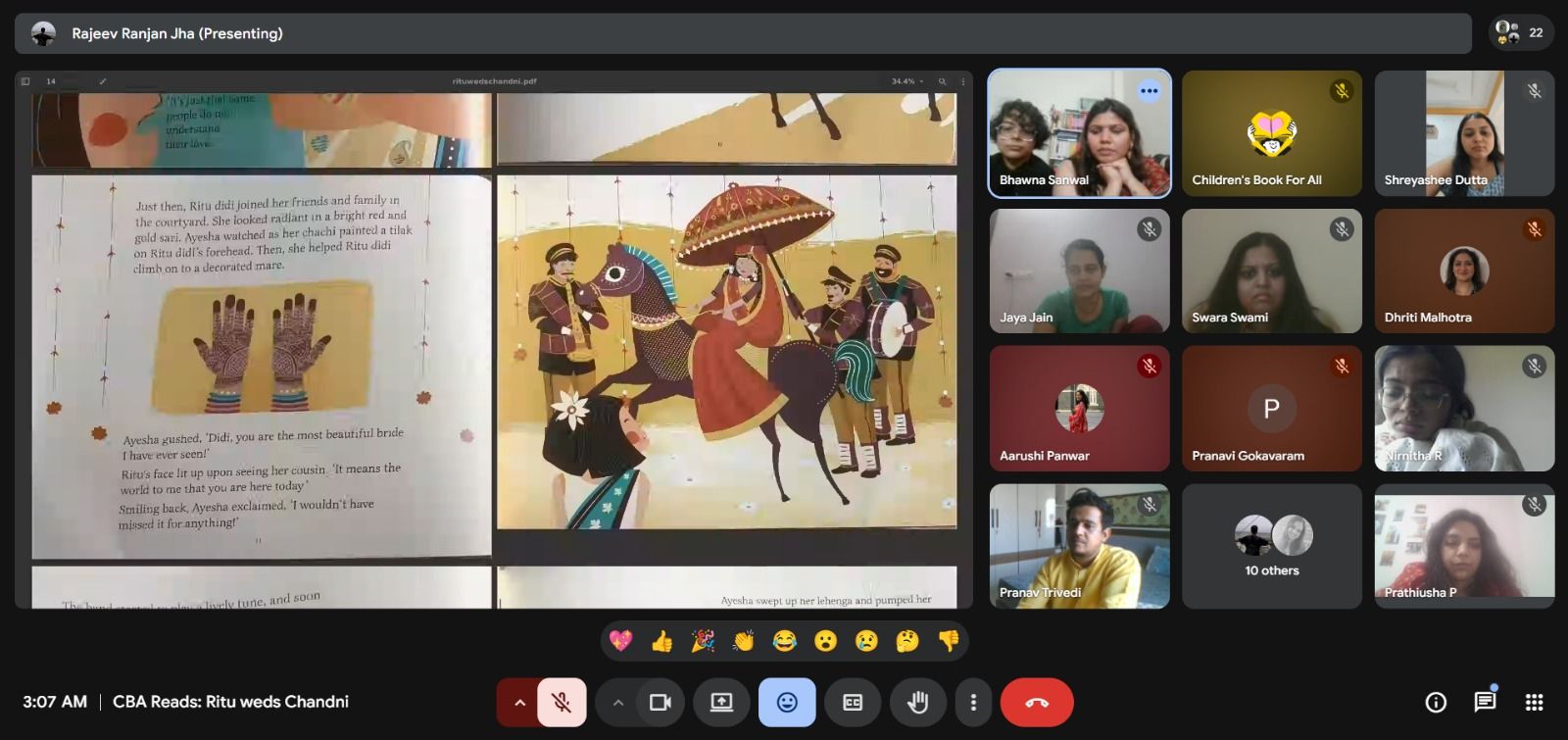 Love knows no boundaries
In this sense, the book seemed to offer glimpses of both the world as it is and the world as it might yet become.
The illustrations deepened this experience of recognition. The scenes are filled with cultural details that many readers might recognise: vibrant clothing, decorations, laughter, and the closeness of family members gathered together. In placing Ritu and Chandni within these familiar settings, something subtle but significant seems to occur.
Their love is not positioned outside tradition.
It is gently located within it.
During the reading, another presence in the story began to stand out in a particularly tender way. Ayesha moves through the pages with an openness that seems to carry both innocence and courage.
Ayesha does not introduce herself as an ally, nor does she make grand declarations. Instead, her care becomes visible in quieter ways. It appears in the questions she asks, the sincerity with which she speaks, and the ease with which she stands beside her didi.
Her curiosity seemed to invite reflection. The questions she asks arise from affection and honesty. And in their simplicity they appear to gently unsettle assumptions that may have long gone unquestioned.
Through her words we see a young person making sense of the world in a way that refuses to see love as something that must be hidden or doubted.
There is also a tenderness in the way Ayesha seems to hold space for Ritu and Chandni and their love. She celebrates her sister’s happiness and speaks from the heart without hesitation. In doing so, she appears to quietly challenge some of the expectations that can surround marriage and family.
Through Ayesha’s presence, we were reminded that courage does not always arrive loudly.
Sometimes it appears as care.
As loyalty.
As the willingness to ask simple and honest questions.
In these moments the story seemed to show how acts of love and curiosity can gently shift the atmosphere of a room.
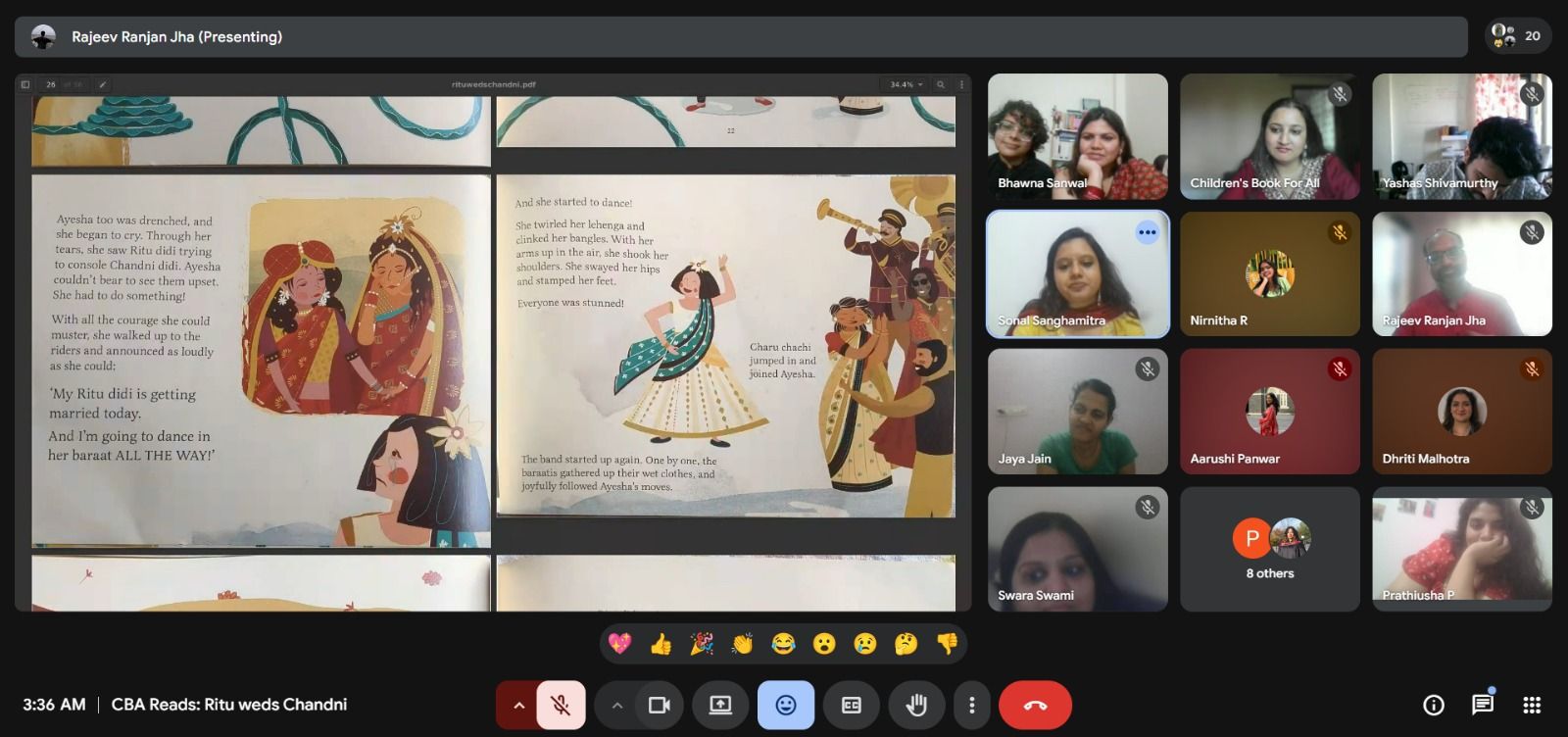 A tender ally we all need in our lives
Spending time with the book together also opened space for conversation. Our reflections began to move toward the ways stories shape what we come to imagine as possible. This story seemed to offer two things at once. It allowed us to recognise some of the realities that queer love often encounters in the world.
And at the same time, it offered a glimpse of what might become possible when love is welcomed and celebrated.
By the end of the reading, what lingered was a quiet recognition that stories like this matter deeply. They remind us that the dominant stories shaping our societies are not the only ones that exist.
Alongside them there are always other stories unfolding.
Stories of resistance and resilience living side by side.
Stories of families learning new ways of holding one another.
Stories of love finding its place within traditions that once seemed closed.
Sometimes it is through gentle stories like Ritu Weds Chandni that these possibilities become easier to notice.
And once noticed, perhaps a little easier to imagine worlds in which many kinds of love can be recognised, celebrated, and held within community.
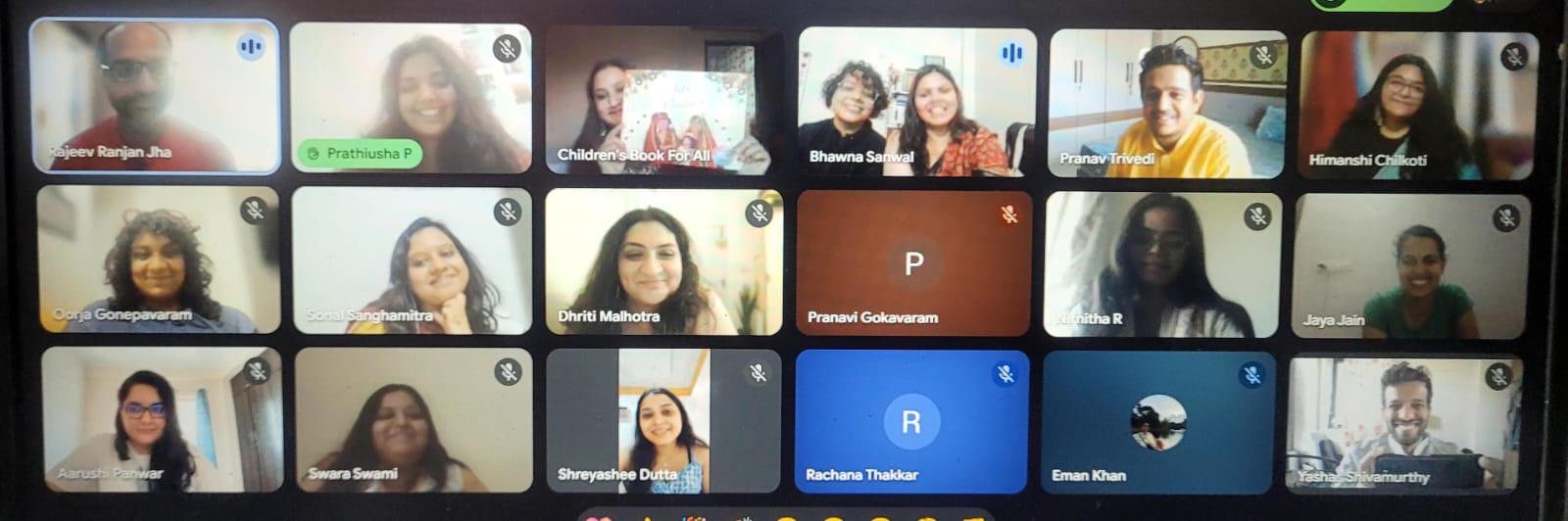 Celebrating and Making Room Together
This reading was facilitated by Bhawna Sanwal and Swati.
You can register for our upcoming readings here