A reflection on how, in listening to someone’s journey, our own slowly and quietly unfolded
 Muskan Kharbanda
 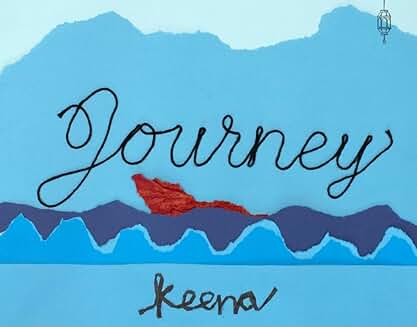 Journeys within a journey
The Coolest Kind of Becoming — Keena
With threads and shreds, mixtures and textures, Keena has woven art — art in the truest sense of the word — and a story that holds many stories within itself.
Before I begin, I want to share a little of Keena’s own life — the life that inspired the birth of this book, one that reflects both the beauty and the complexities of family life, and the individual lives within it.
After raising her children, who eventually moved abroad, Keena found herself alone as her husband moved cities for work. There is a quiet kind of loneliness in that — one that many women know intimately.
And then, plot twist.
In her 50s, after becoming an empty nester, Keena embarked on an artistic and deeply personal journey — becoming a vocalist and comic illustrator, and exploring swimming, tango dancing, trekking, cycling, tai chi, and even writing her own book.
She transformed her empty nest into one full of life, vigour, joy, excitement, and adventure.
And perhaps that is what stayed with me most: that becoming does not belong only to youth. Sometimes, it arrives later — softer, fuller, and more self-owned.
Within Keena’s Textures, We Found Ourselves
The beauty of this book lies in the fact that it is wordless — it is sheer craft.
Through textured paper, shreds of yarn, and layered visual storytelling, it spoke to so many individual experiences during Children’s Book for All (CBA)’s community reading on March 22, 2026.
From reliving the nostalgia of childhood to speaking of grief and loss, this book took each one of us on many journeys.
And what emerged was this: lived stories held, grief shared, memories cherished, and hope rekindled.
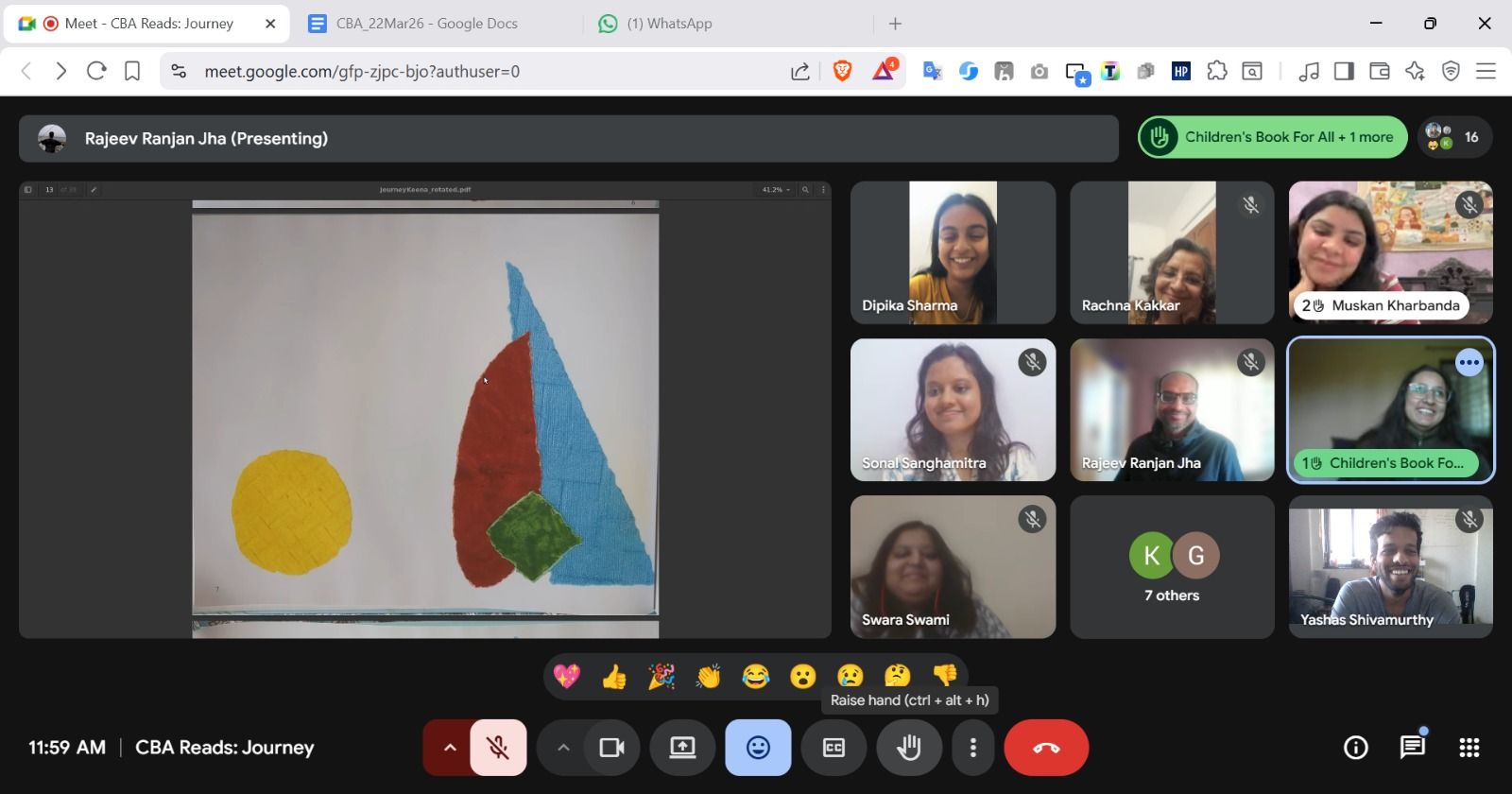 A story of a family growing - together, apart and together again - in different ways
The Journey
At one level, the book tells the story of a family — of coming together, and eventually, of each individual finding their own footing as they grow older.
At its centre is the woman — or at least, that is how I choose to read it — because women, to me, are always the protagonists.
Left alone, she begins a journey of self-exploration — one that slowly opens into many others.
And yet, the family does come together in the end. Yes, in a different form, but it does.
The children, flying — one a balloon, the other a kite — still held by the same string.
And the protagonist and her partner — together.
Not unchanged, but together.
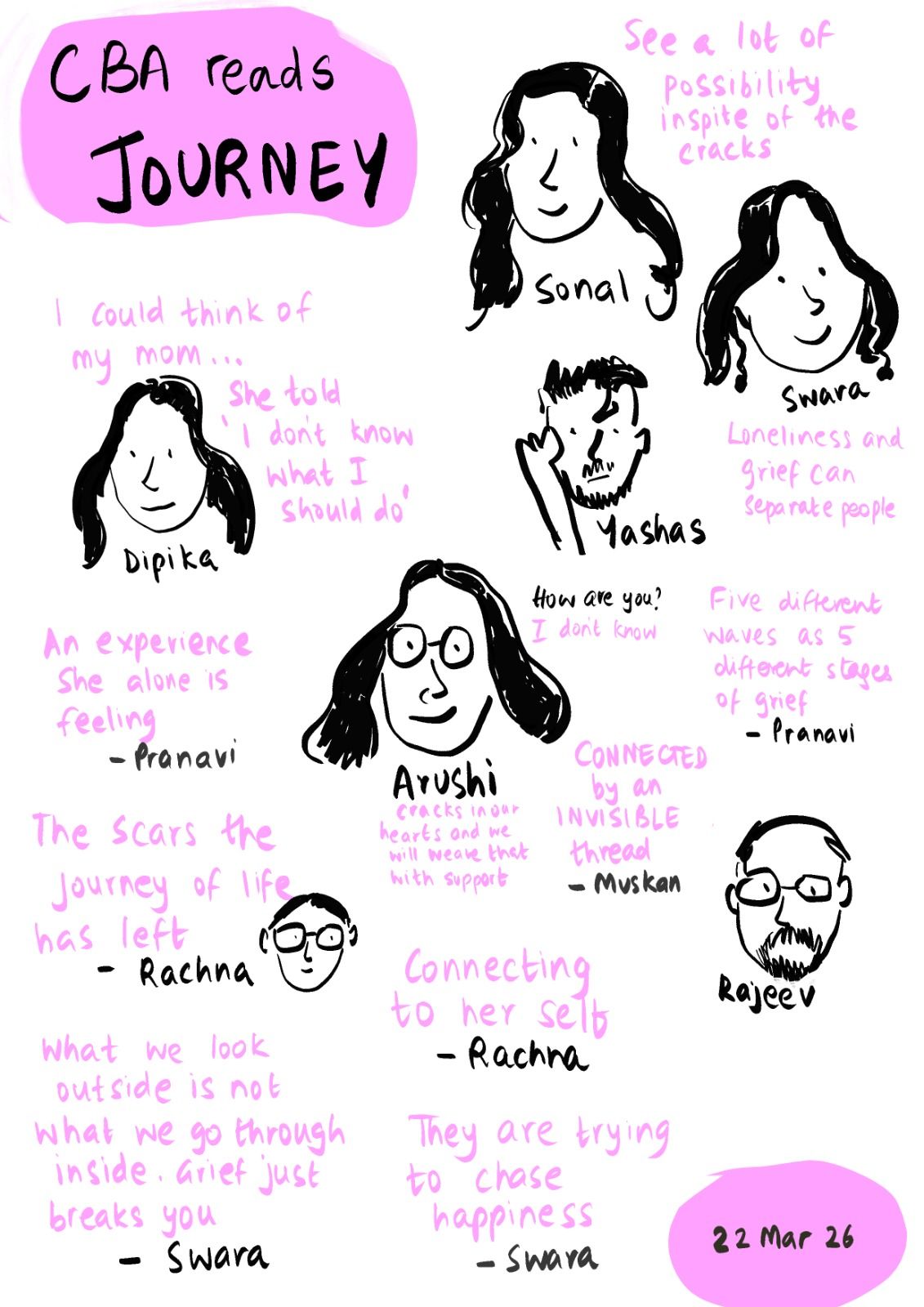 Keena’s Art capturing what came up for us during the reading - Part 1
What Stayed With Me
I found myself holding my grief through the reading — at moments, even crying — and yet, somehow, I was left with a huge smile on my face and hope in my body.
As Shah Rukh Khan, our country’s beloved, says:
“If it’s not a happy ending, then it’s not the end — picture abhi baaki hai, mere dost.”
What looked like cracks — as the protagonist was left alone and the paper began to fracture — were, in truth, openings.
And that stayed with me.
Some Themes I Want to Sit With
1. The Emptiness of the Nest
I want to talk about the emptiness, the grief, and the quiet overwhelm that an empty nest can bring — especially for a woman.
Women are often shaped — by families, by culture, by the quiet and sometimes loud expectations we inherit — to build a family, raise children, care for their husbands, and invest every part of their being into the lives of others.
Their lives become interwoven with everyone else’s, often at the cost of their own becoming.
And yet — what happens when everyone moves on, and she is left alone?
What happens to a life that was taught to revolve around others?
That question sat heavily with me.
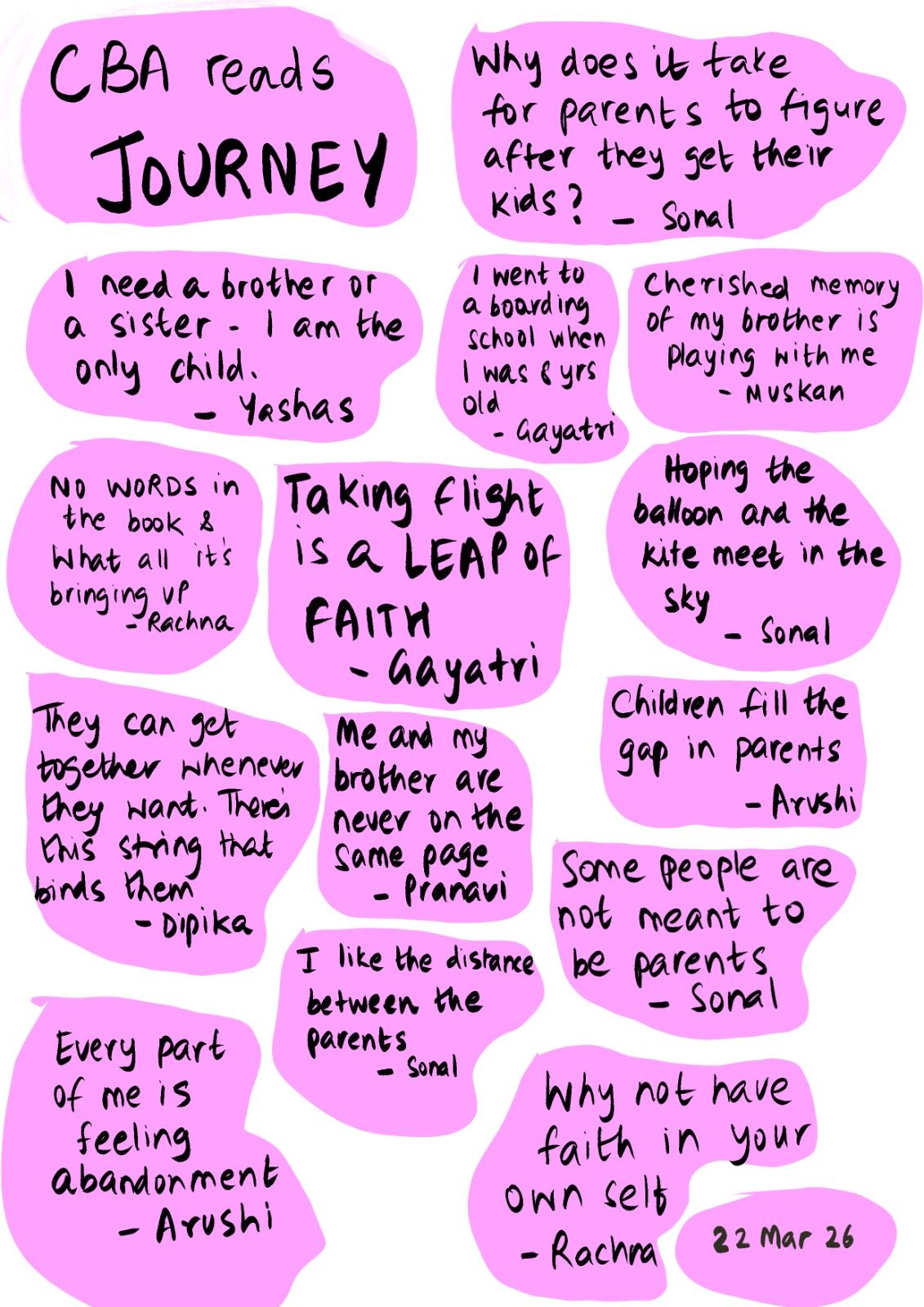 Keena’s Art capturing what came up for us during the reading - Part 2
2. Women as the Epitome of Courage
And still — women endure. More than that, they become.
Just like Keena, and like the protagonist in this story, women often carry a quiet inner wisdom — the kind that Clarissa Pinkola Estés writes about — what some might call instinct, or inner knowing.
It is this wisdom that helps transform loneliness into becoming.
I have seen many women begin again in these quiet, ordinary, extraordinary ways — starting home businesses, travelling, growing food, taking up forgotten passions, or reaching out to old friends.
None of these acts is lesser than the others.
Each one is its own quiet rebellion against emptiness.
3. Cracks as Openings
The textured paper in the book — almost fractured in places — held so many cracks.
At first, they felt like something was breaking.
But the longer I sat with them, the more they began to feel like openings — small spaces through which the protagonist could move, explore, and find something new.
They reminded me of Kintsugi — the Japanese art of repairing broken things, where cracks are not hidden, but gently held, honoured, and transformed into something beautiful.
They also reminded me of narrative practices — of how cracks can become entry points. Places where light enters. Places that guide us toward our values, and eventually, toward preferred identities.
What appears broken is not always broken.
Sometimes, it is simply becoming.
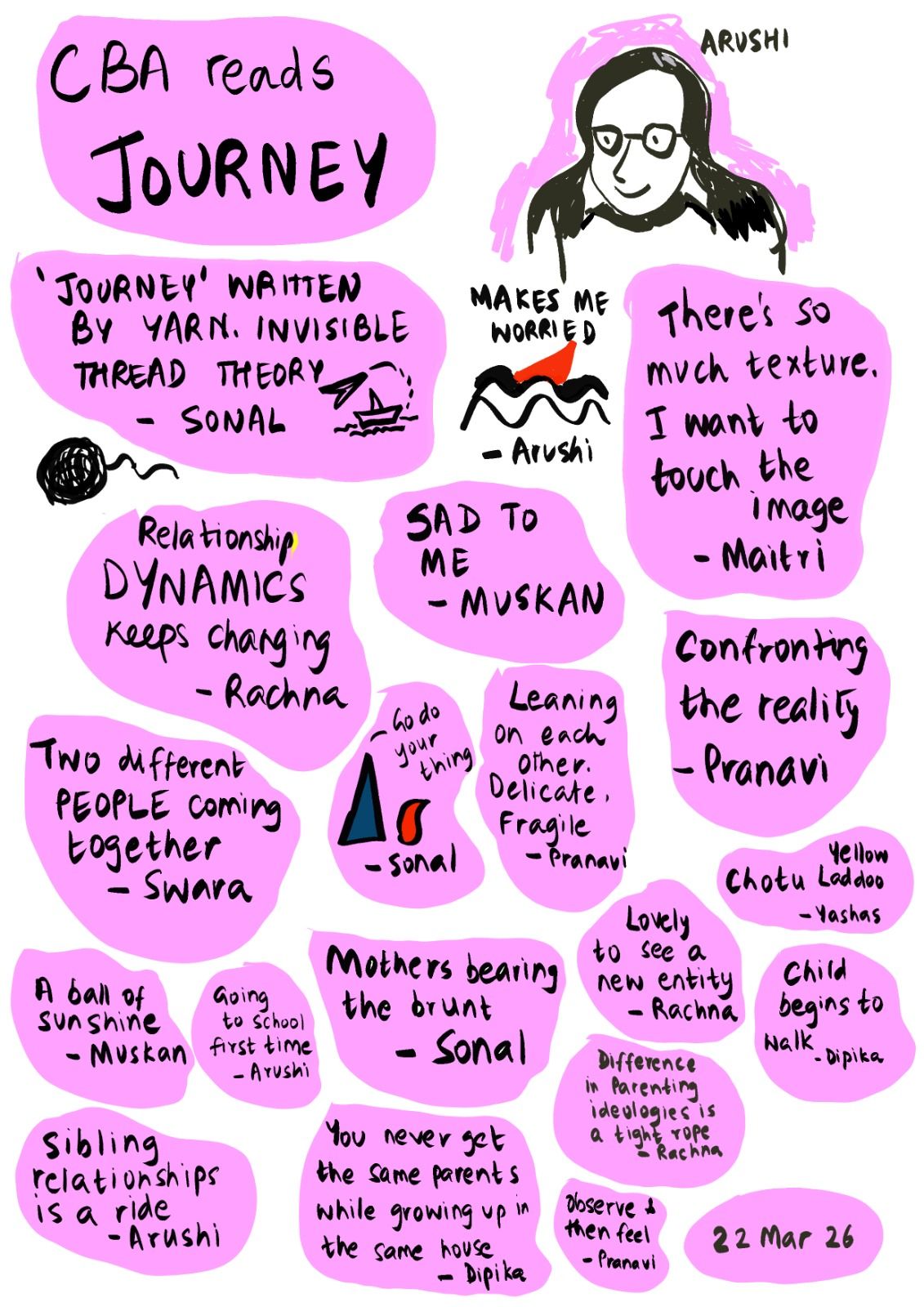 Keena’s Art capturing what came up for us during the reading - Part 3
4. A Collective Reflection on Family
As we began speaking about family, something opened in the room — not one story, but many.
There were traces of feeling like one’s parents were not ready to have them.
A quiet recognition of how often women carry the emotional and practical weight of both household and parenting.
There was also something profound about the care it takes to raise children in a way that allows them to become their own people — with their own identities, desires, and ways of being in the world.
That, too, is an art.
And then there was this thought, which stayed with me deeply:
You never really grow up with the same parents — even if you grow up in the same house as your siblings.
That felt so true.
There was longing in the room, too — the longing of being an only child, of softly wishing for a sibling.
I found myself moving between these stories — recognising some, simply sitting with others.
And in all of this, what felt most true was this:
There is no single story of family — only many.
Layered, unfinished, contradictory, tender.
To End
I want to honour this:
The quiet grief that emerged in that space, when we spoke of family, is something that will stay with me.
And it is something I hold with care as I write this.
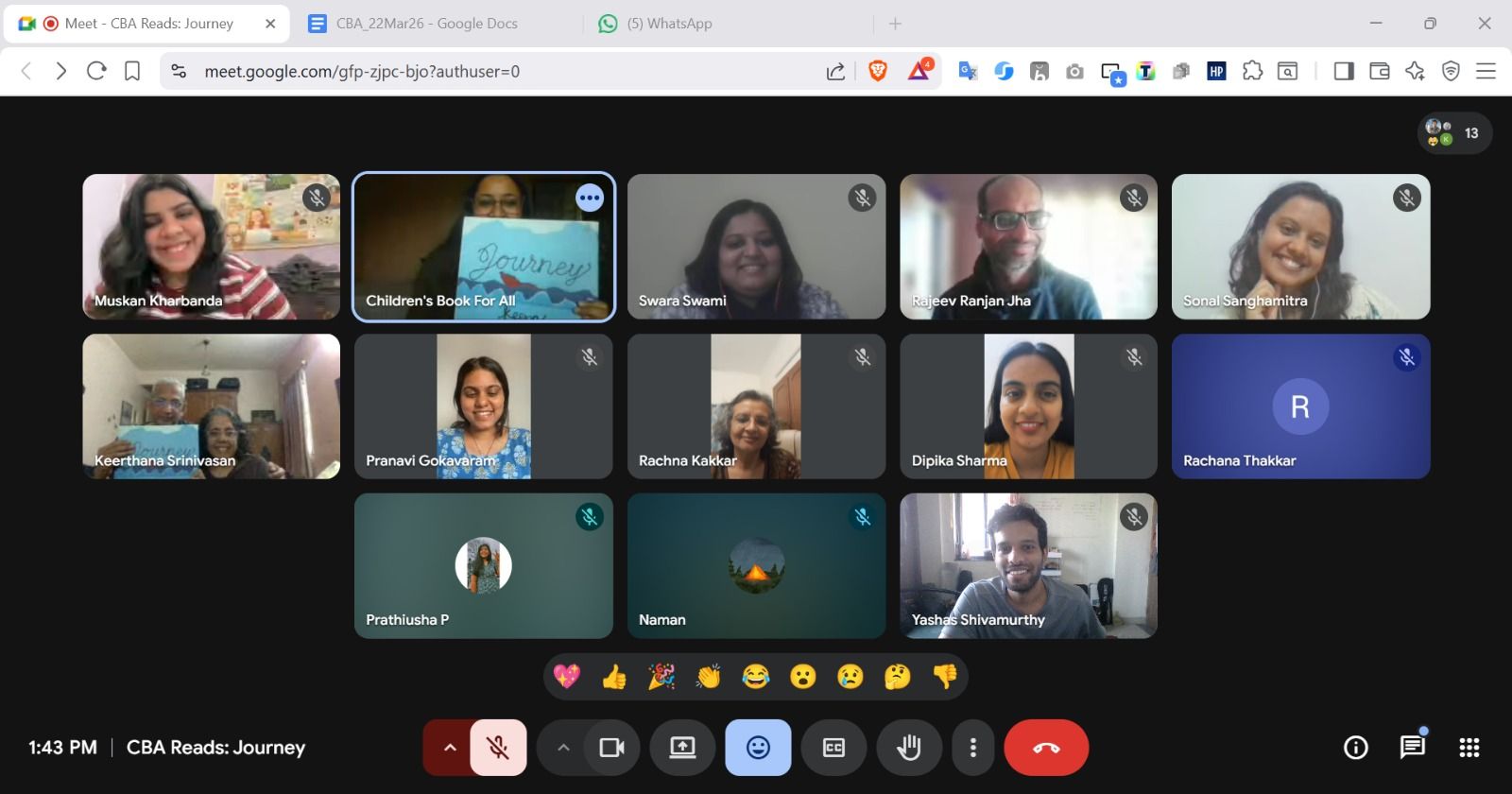 Sharing our journeys - together
This reading was facilitated by Keerthana Srinivasan who is also the author of the book.
You can register for our upcoming readings here