What We'll Build: What a safe, shared space can feel like
 Rajeev Ranjan Jha
 This Sunday, we gathered to read together the book “What We’ll Build” by Oliver Jeffers with the intention to invite the participants to imagine and reimagine the worlds, relationships and home we wished to build and live in.
Through the pages of the book, we followed a father and daughter as they build a world together - physically, emotionally, and relationally. The story highlighted co-creation between an adult and a child, where the child is not passive but an active participant with agency. The father did not dictate the future; instead, he built with the child - sometimes even learning from her. This was in contrast to the common power dynamics experienced by participants in their experience. The story helped us reframe care giving as mutual growth.
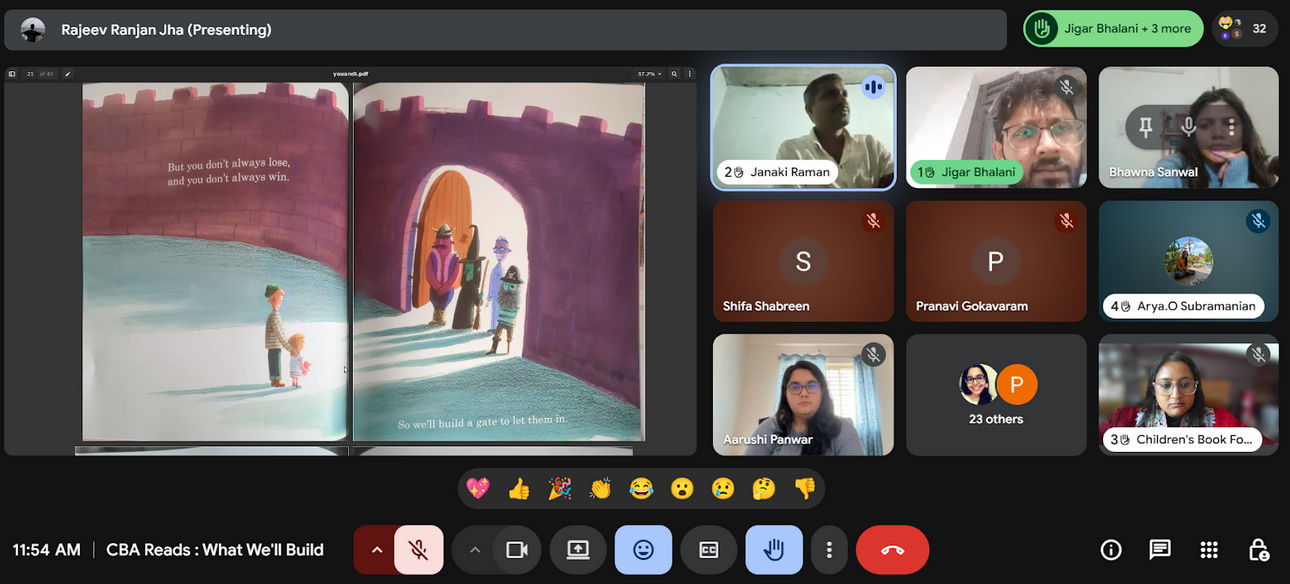 But you don’t always lose, and you don’t always win.
So we’ll build a gate to let them in.
But you don’t always lose, and you don’t always win.
So we’ll build a gate to let them in.
There were several key themes that emerged strongly in the reading and discussions:
-
Building as an ongoing process : Home, love, and safety are not finished products but things that are constantly made, repaired, and reshaped. Mistakes are a part of the building process.
-
Home as a feeling, not a place : We resonated with the idea of home as safety, choice, authenticity, rest, and belonging-often created with chosen family or community.
-
Time as shared experience : Time is not measured numerically but through moments, milestones, and presence. The act of “keeping time together” reflects care, impermanence, and intention.
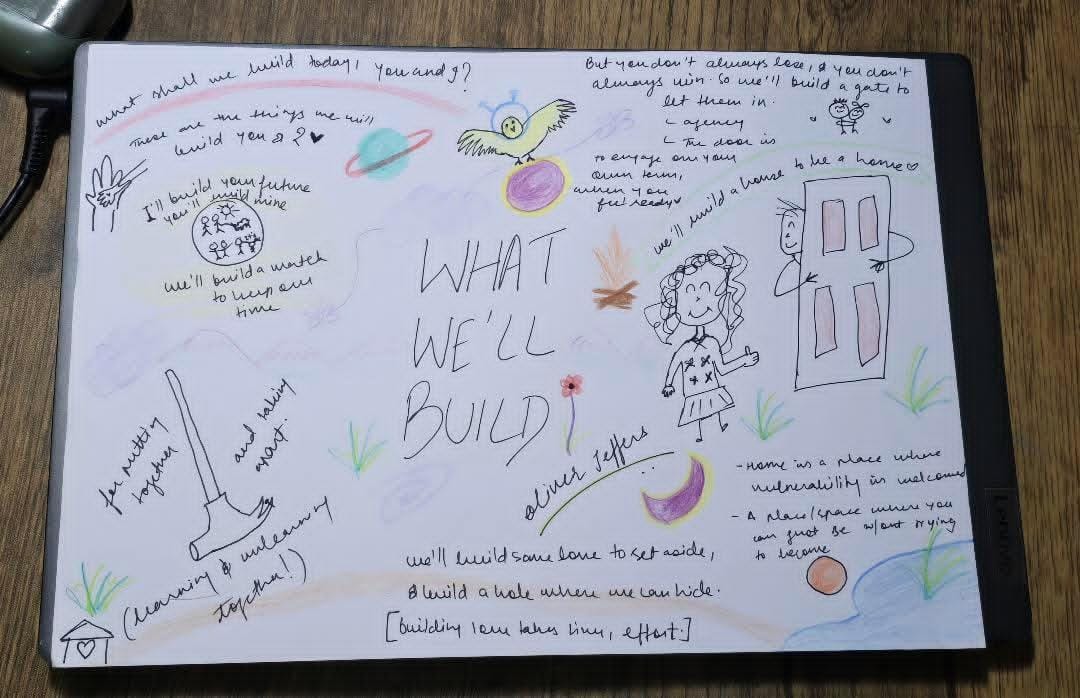 Art reflecting the reading by a participant
-
Love as active work : Love is something that must be built deliberately-through effort, repair, boundaries, apologies, and rest-not taken for granted.
-
Safety, boundaries, and repair : The fort, walls, doors, and gates in the story symbolize protection, emotional regulation, and the ability to engage with fear or conflict on one’s own terms.
-
Imagination and hope: Journeys to the moon, oceans, and new lands emphasize possibility, rest, and joy.
-
Community and resilience: Even when things are lost, damaged, or uncertain, the father-daughter retain their tools, relationships, and capacity to rebuild - mirroring how community helps people survive and heal.
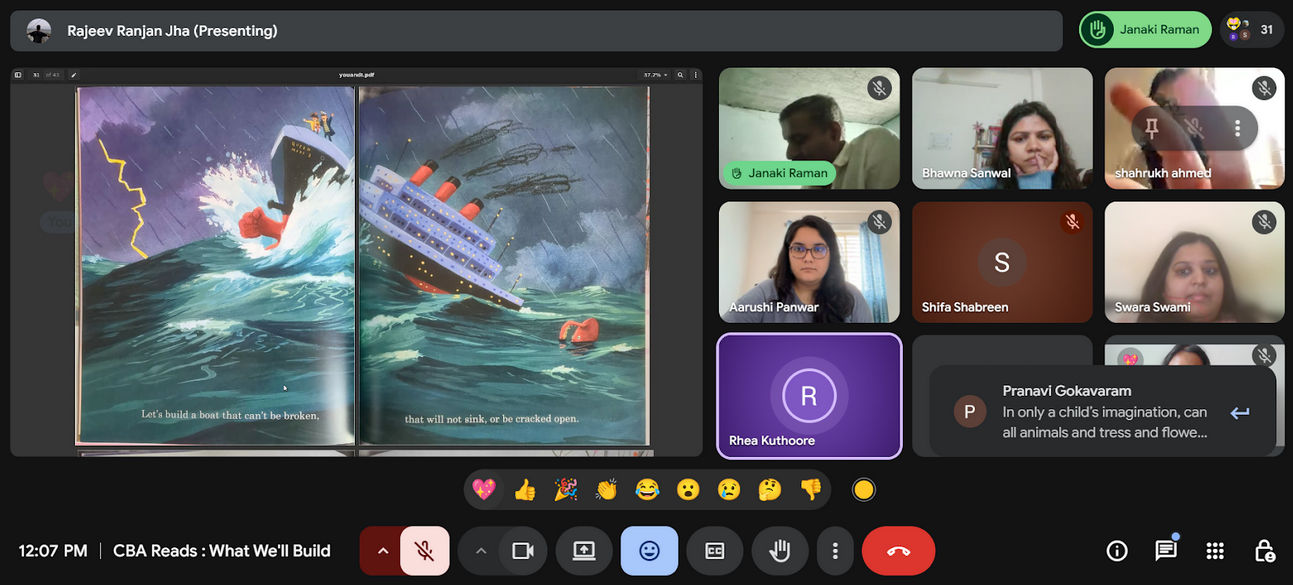 Let’s build a boat that can’t be broken, that will not sink, or be cracked open.
Alongside warmth and hope, the reading also surfaced grief, longing, and critique - particularly the recognition that this kind of nurturing adult presence is a privilege many did not have. This led to reflections around collective healing and on becoming the caregiver or community we once needed.
We closed the session by using the opportunity to create a charter of values for our “Children’s Book for All” community anchored in this reading.
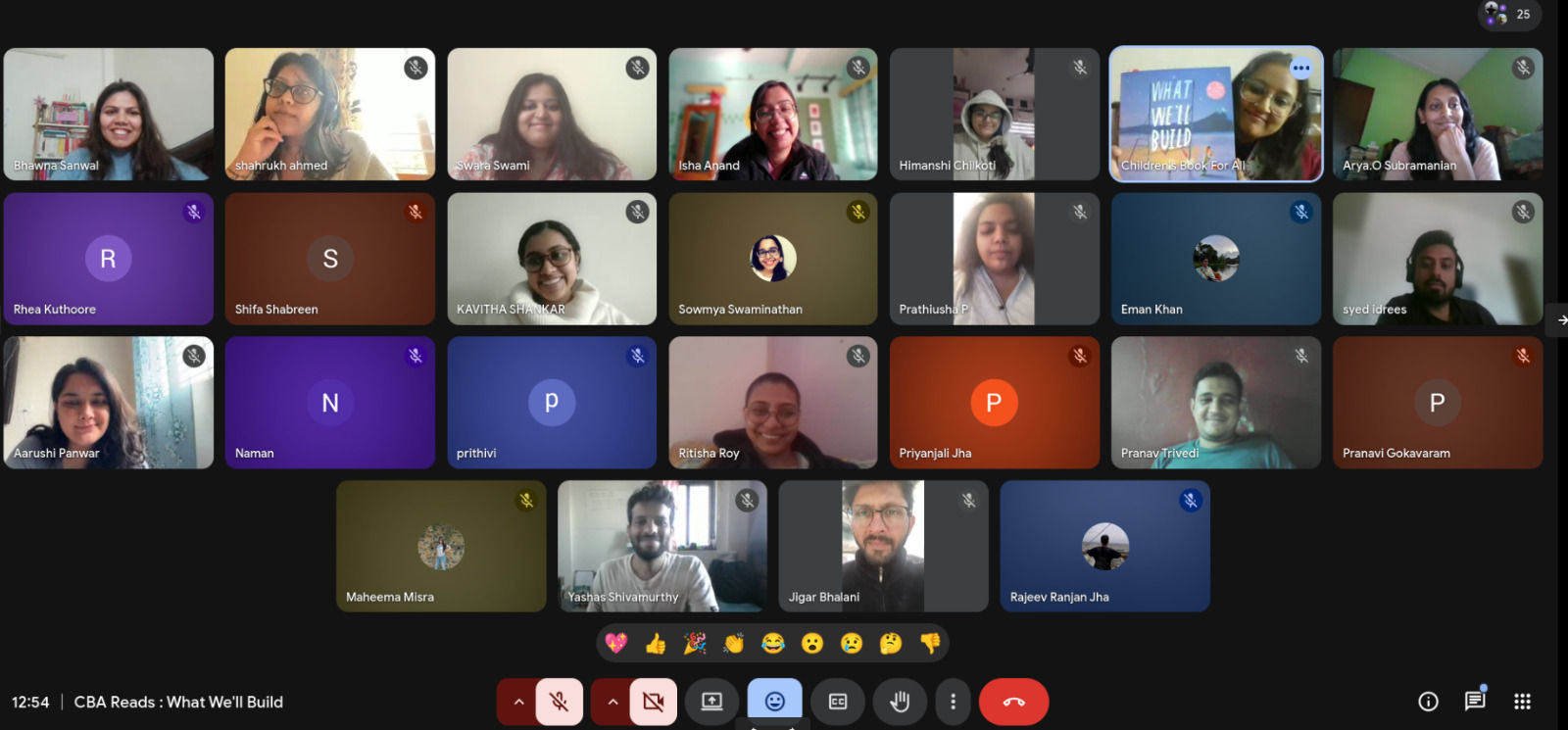 Experiencing collective healing - together
This reading was facilitated by Bhawna Sanwal and Arushi Ralli
You can register for our upcoming readings here