A story about fighting patriarchy and standing up for your identity.
 Diksha
 As part of the Women’s Development and Gender Sensitisation Cell at my college, a constant phrase we used to end every text, conversation, or gathering was: love and rage. As women and marginalised sections of society, we are often accustomed to bottling up - in ways that don’t even feel like bottling up. There are so many ways in which we feel rage against systems, questions we wish to ask, answers we wish to challenge, and more often than not, the fatigue we feel from battling and re-battling the battles that were never entirely ours to fight.
It’s amusing, thrilling, and wholesome that something like a children’s book can evoke a sea of emotion in a group of people who associate as adults - living their realities, sometimes dualities, facing patriarchy, seeing it, feeling it, eating it; some days standing against it, some days letting it pass, but more often than not, questioning it.
CBA is a co-created safe space for so many such adults - people who connect to their inner child while still taking pride in their adulthood, skimming through both beautifully.
This Sunday at CBA, we were reading Na Aasman Gira, Na Chand Bauklaya, written by Nahin Mirza, illustrated by Sagar Kolwankar and published by Muskaan and Eklavya. The title gently nudged the group toward what a book on patriarchy could mean - without “loud reactions.” It is the story of Jamuna: inquisitive, observant, interested, rebellious - and at the end of the day, a girl in a patriarchal structure. A story that, in its simplicity, speaks of complex nuances- of caste, class, hierarchy, division of labour, gender roles, and in a world of ambition, an act of rebellion, yet imperfection.
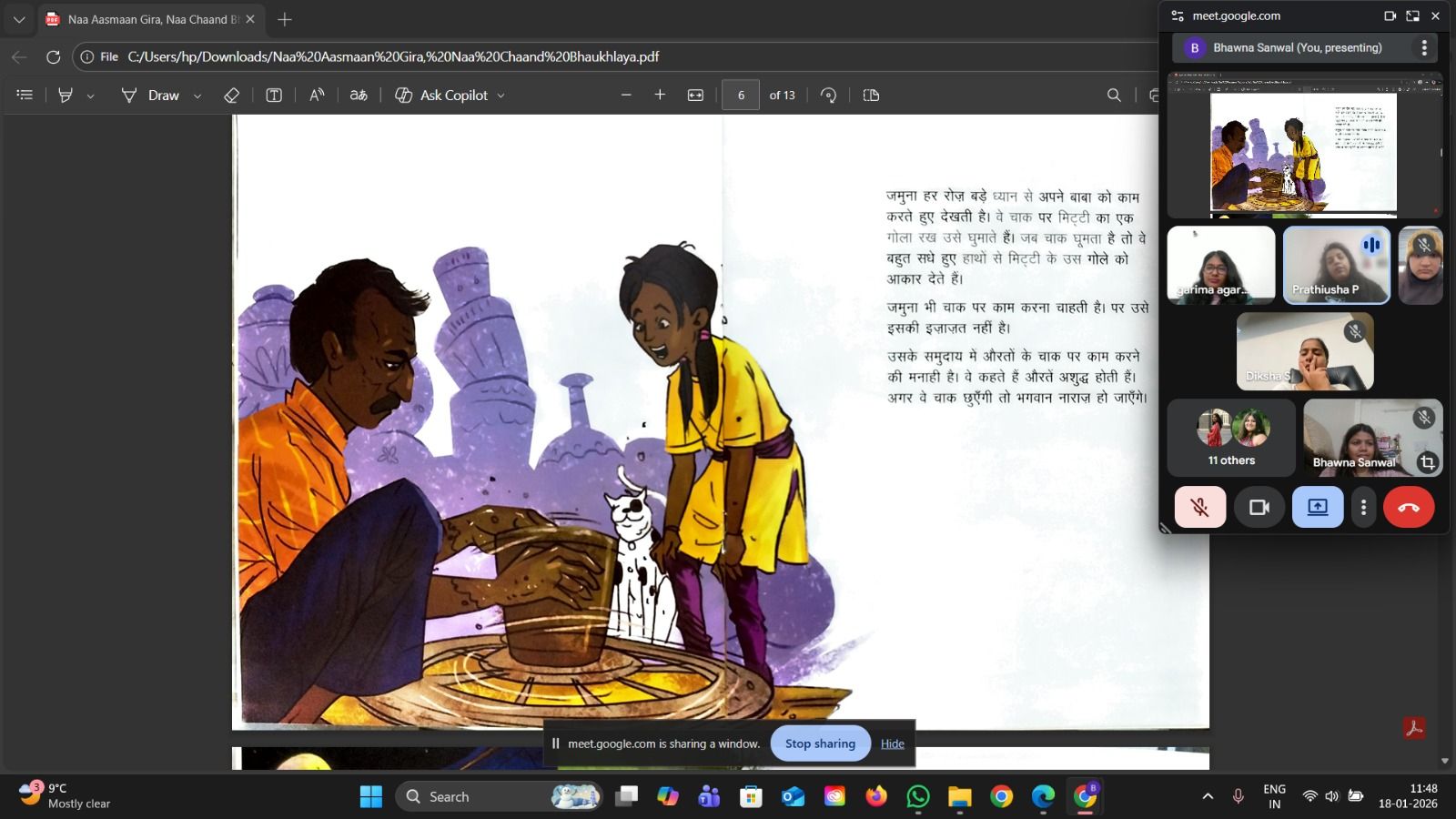 Collectively witnessing Jamun’s fight for shaping her own identity
Themes we discussed during the reading:
Women, courage, and rebellion We spoke extensively about how women, in both small and big ways, navigate how they want to be treated versus how they are treated; how they make life choices around relationships, marriage, living independently, drinking - and how these become uncomfortable conversations, typecasting, and acts of rebellion.
Women’s bodies and agency Menstruation, women’s bodies, tattoos, piercings, pleasure, sensuality, wanting to smoke a hookah for the sound of bubbles, or the queer urge to stand and pee. small things that concern not many, but only a woman and her body often become battlefields of endless debates ,questions, contestation in the public purview affecting a person’s perception of themselves, which brings us to the question of who truly holds the agency on a woman’s body?
Gender roles Deeply engrained systems that box people into roles based on gender - what feeds the system, what keeps power dynamics going, how patriarchy is passed on. These structures determine who gets the front-facing credit for labour, agency, and choice. What women choose to do, or how they contribute - are these truly choices, or systematically manufactured ones that appear real but may hold no value of their own?
Repercussions of breaking norms Rebellion is often seen as something that will turn the world upside down. But as the story progresses, it gently asks - does the world really tumble and fall apart when a woman rebels, or does it simply remain the same?
Celebrating imperfections The race that traps us in believing that the end goal must look pompous, alluring, perfect - do we leave space for ourselves to be imperfect, to embrace that imperfection, and continue to be proud of ourselves?
The metric of success As everyone began narrating their own possible climaxes to this open-ended story, we paused and reflected on what success meant to each of us. And while success is subjective, the range of thoughts was beautiful - for some, success was being an empowered entrepreneur or having a fulfilling career; for some, it was being in power and “passing the mic” to enable others; for some, it was simply being imperfect and breathing; and for some, just being able to feel happiness.
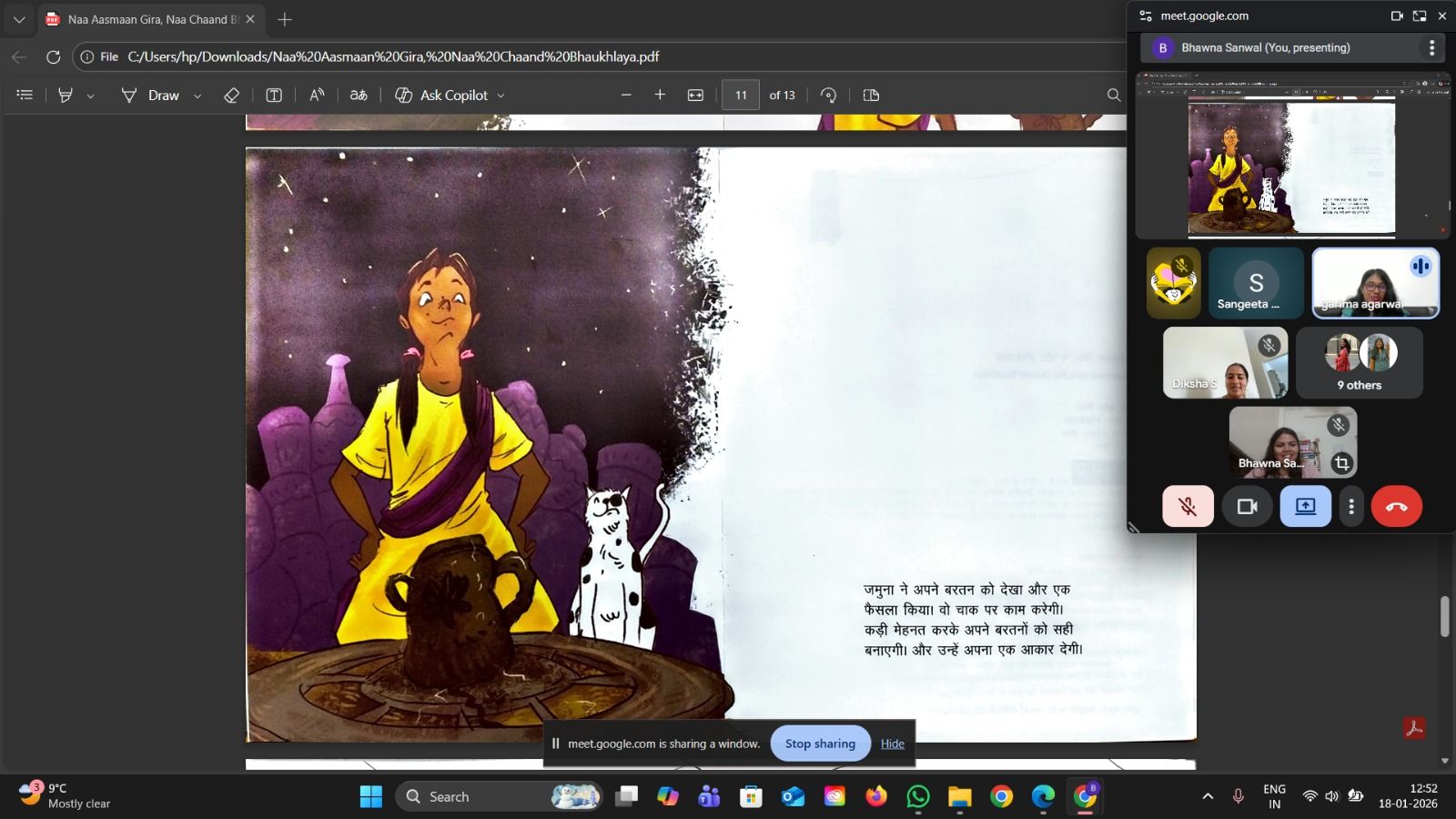 From hesitation to flow
In an inner patriarchal society, to be privileged with a safe space - a female-dominated, women-led space - is a sigh of relief. To see conversations range from anger to release, from feeling secure in community to pausing and embracing our own selves. To hold space for each other, to feel belonged and angry together - this is why one can reflect back and say: children’s books are truly for all, and till we bring equity in the status-quo, may women always be empowered to be in love and rage.
Long live rebellion.
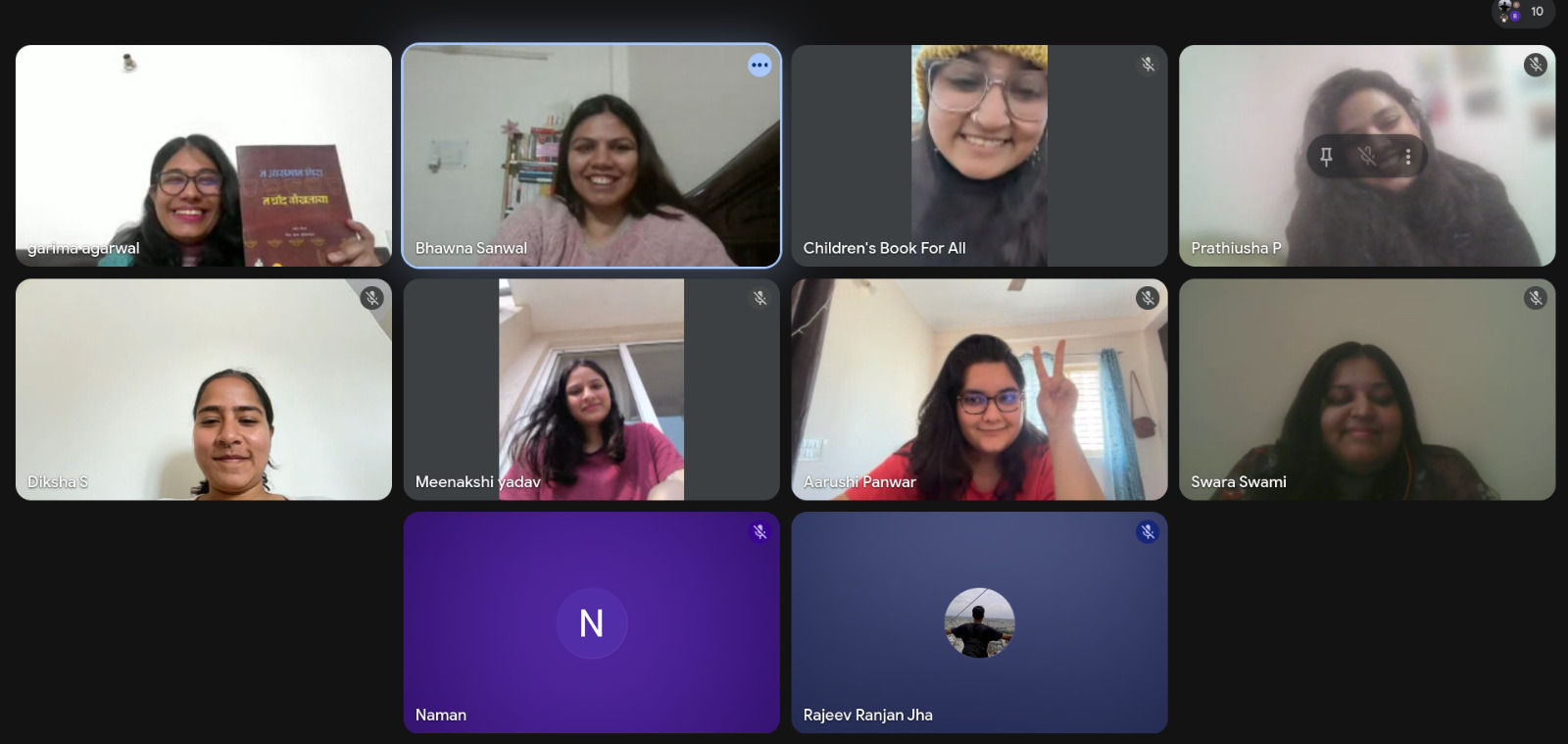 A tiny rebellion on a CBA Sunday
This reading was facilitated by Garima Agarwal, Bhawna Sanwal and Isha
You can register for our upcoming readings here