Big is expansive. Big is valid. Big is Beautiful
 Himanshi Chilkoti
 This Sunday, we came together with BIG smiles, BIG love, and BIG voices to read a very special book - Big by Vashti Harrison.
A book of representation.
A book of body embodiment.
A book of choosing yourself.
A book of comfort.
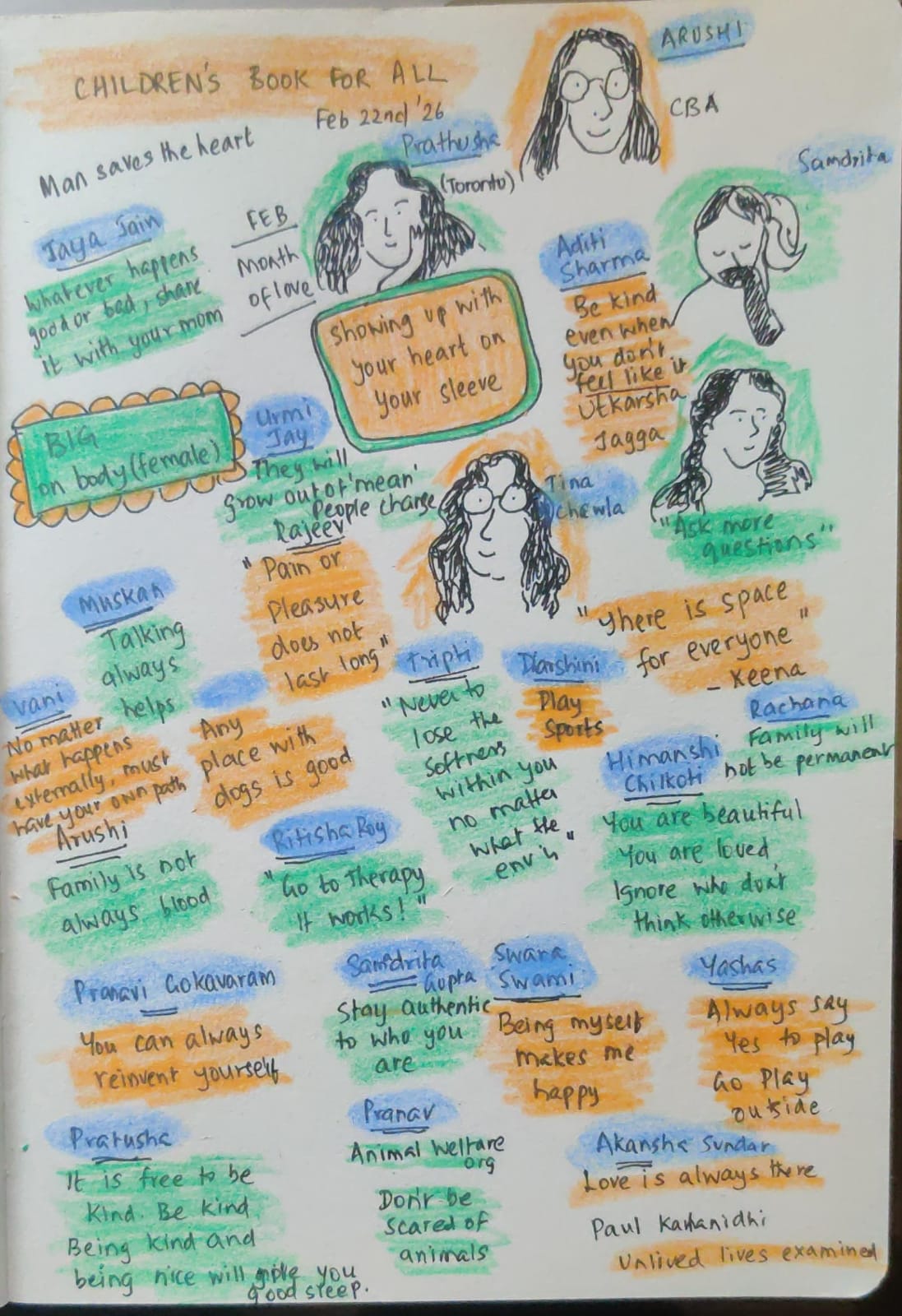 Starting the session with the wisdom our body holds
Through its pages, we met a little girl whose body becomes louder in the world than her voice. A child who simply wants to do what she loves - dance, wear colorful clothes, and play freely - but finds that what once earned her praise slowly becomes overshadowed by commentary on her appearance.
The book gently yet powerfully surfaces the memories our bodies hold: the glances, the jokes, the “concerns,” the comparisons.The opening of the book reflects something deeply familiar - how adults often try to shape a “good girl” from infancy. Be polite. Be caring. Be graceful. Be honest.
Each time she complies, she is told she is a “BIG girl now.” Over time, however, the meaning of BIG shifts. It moves from age and achievement to size and scrutiny. What was once affirmation becomes surveillance.
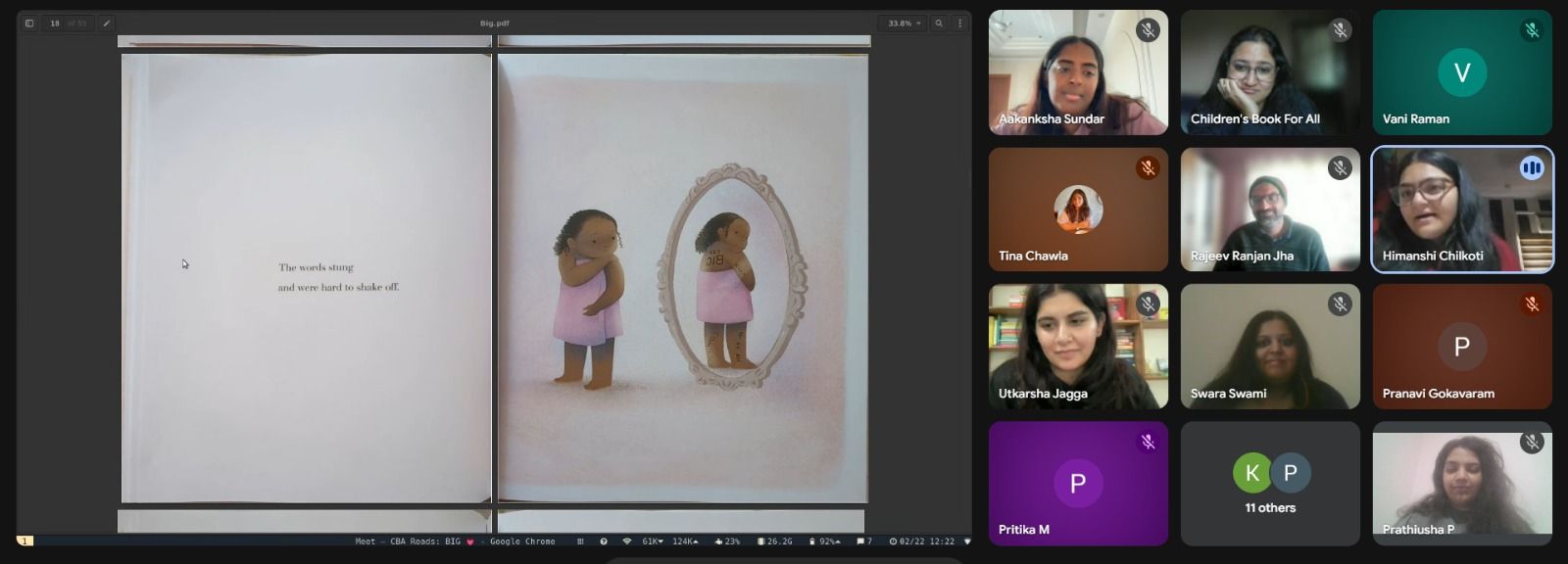 The scars body shaming leaves on our bodies
The story also speaks to the subtle and overt ways educational spaces, peer groups, and broader society reproduce narrow beauty standards. It questions how quickly we reduce children to their bodies. How easily we forget to know someone for who they are, choosing instead to define them by how they look.
Many pages hold only illustrations and no words. The silence speaks loudly. The child’s confusion, hurt, isolation, and anger are shown through color, space, and expression. You can see her dilemma without anyone explaining it. You can feel the weight without it being described. The absence of text makes the emotions stay longer. It allows the reader to sit with what is happening instead of rushing past it.
Key Themes That Emerged in the Reading
Body as memory
The body keeps stories. Words spoken casually by others often settle deeply within. The book reminds us that children internalize more than we realize - tone, silence, comparison, and correction.
Shifting meanings of “big”
“Big” begins as growth, maturity, pride. Over time, it becomes coded language - layered with judgment. The story exposes how language evolves socially and how children absorb those shifts.
Surveillance and beauty politics
The narrative reflects the societal fixation on body size, especially for girls. It highlights how beauty standards are constructed, policed, and normalized - often under the guise of concern or discipline.
Educational spaces and sensitivity
Schools and peer environments are shown as places where empathy is often lacking. Casual remarks and unchecked teasing can shape a child’s self-concept in profound ways.
Reclaiming narrative and voice
One of the most powerful moments in the book is when the girl returns the words placed upon her. Instead of shrinking, she reclaims her bigness - not as shame, but as space, presence, and power.
Courage as self-definition The story reframes courage not as loud rebellion but as quiet self-trust - the decision to define oneself beyond imposed labels.
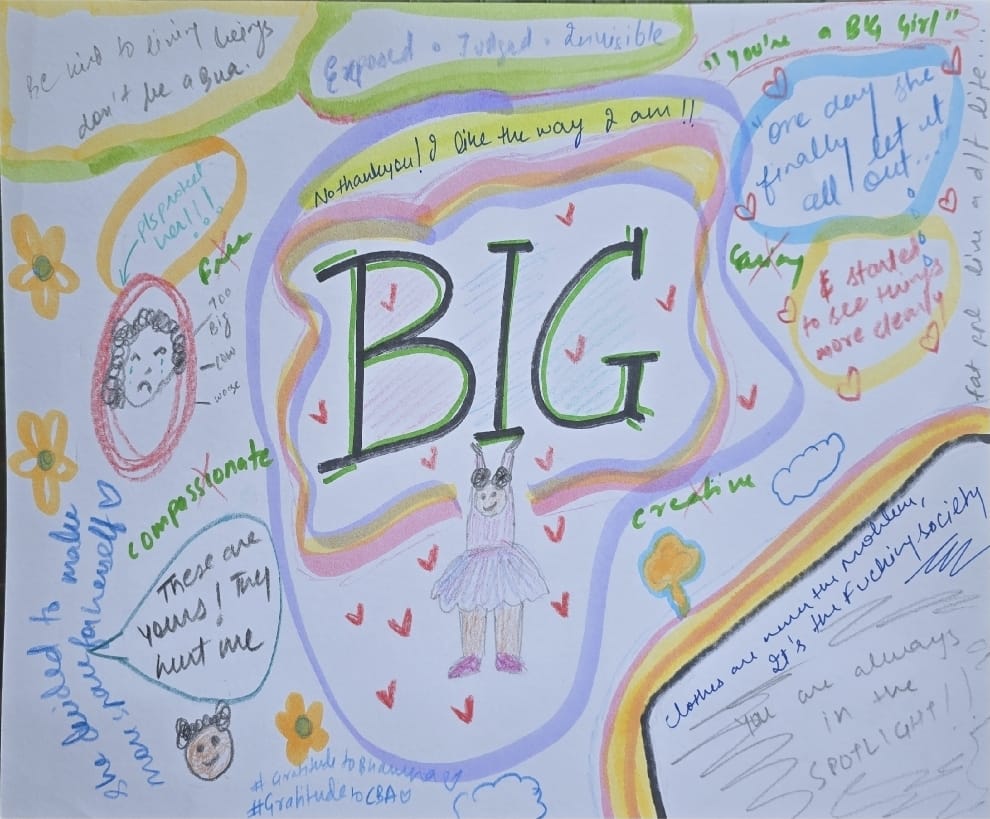 Shifting meanings of the word ‘BIG’
Throughout the reading, many narratives surfaced. Memories stored in our own bodies. Harsh, insensitive words that left lasting imprints. The invisible price one pays for inhabiting a certain body type.
The space felt heavy at times. It felt tender. It felt honest. Many said they felt validated. Many said they felt less alone.
These lived experiences connected us more deeply. They brought us closer.
Within the shared space, we felt for the little girl. We felt anger at the systems that made her question herself. We felt pride when she gave the words back. We felt tenderness when she chose herself.
By the end, we were not just sitting with the story of one little girl. We were sitting with our own inner children. The parts of us that learned to shrink. The parts that are still learning to expand again.
The reading became more than a story - it became a collective remembering. A space to imagine what it might feel like to return the words that hurt us. To stand tall in our own bigness.
To take up space without apology.
We closed the session holding onto the word “Big” - not as shame, not as an insult, but as presence. As creativity. As fullness. As power.
Big enough to take up space.
Big enough to be loved.
Big enough - exactly as we are.
Big enough to say - “I like the way I am.”
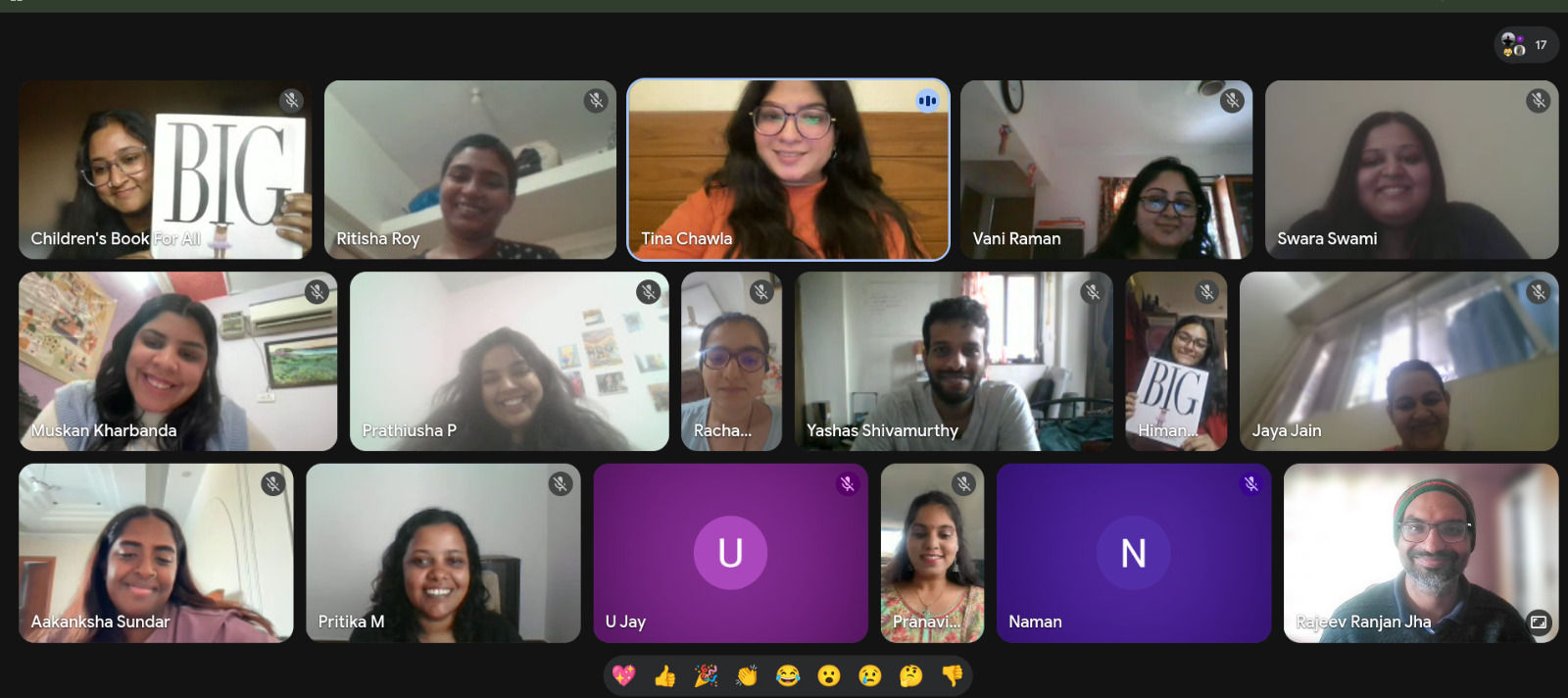 Reclaiming the word ‘BIG’ together
This reading was facilitated by Tina Chawla and Utkarsha Jagga.
You can register for our upcoming readings here