Justice like water will flow through all the barriers
 Rajeev Ranjan Jha
  Bhimayana: Experiences of Untouchability
Caste impacts everyone. We started with this.
All of us have our own lived experiences of caste oppression - as victims or as witnesses. The book was about to open up difficult emotions of rage, grief and discomfort within each of us - and we decided to stay with them together.
Bhimayana: Experiences of Untouchability is a graphic novel of Dr. B.R. Ambedkar’s life, rendered in the Pardhan Gond art tradition of Madhya Pradesh by Durgabai Vyam and Subhash Vyam.
The book’s opening is not historical. It is a bus stop. A recent day. A man who considers himself super qualified, stuck in a dead end job, certain that caste-based reservation is what stands between him and the life he deserves. This scene is so ordinary, so recognisable. This conversation is not something we read about in the past tense. It is happening now, in offices and at dining tables and often from the mouths of people we know and love. And sitting with it in the book, many of us found ourselves also sitting with how much labour it takes to remain present in those conversations. To not leave the room. To keep explaining what there should be no need to explain.
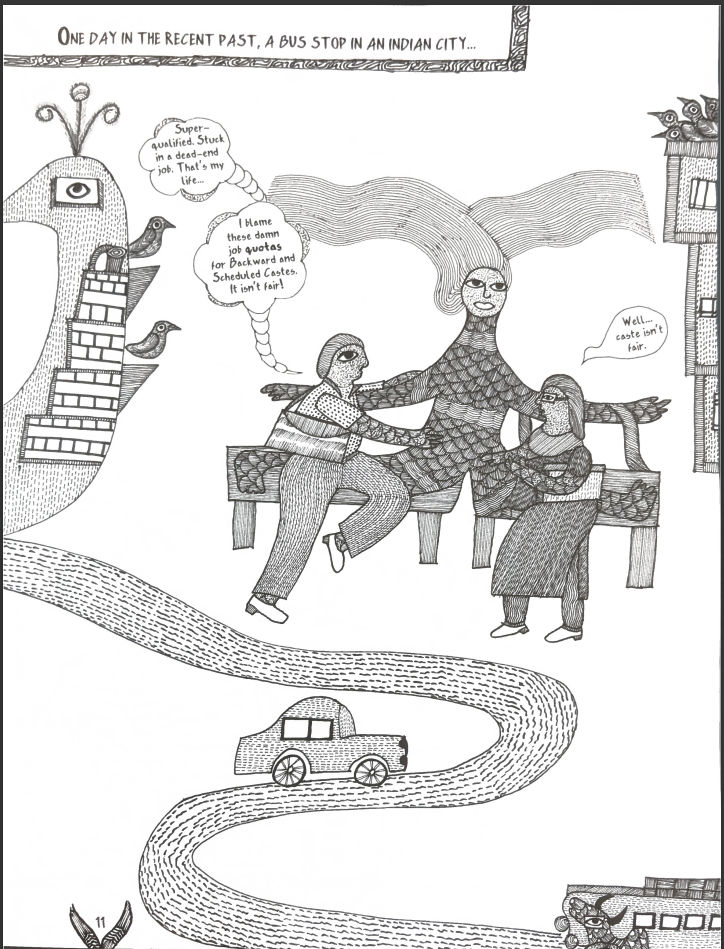 Conversations happening right now about caste
A girl in the book responds to the man: I would read Ambedkar, if I were you.
The whole book, perhaps, is in that one sentence.
The chapter we read was titled Water.
A ten-year-old Bhim, at school in Satara, 1901. He is thirsty. When the bell rings, all the other children go to the tap. By the time they finish, the peon has gone - and Bhim is not supposed to touch the tap. The peon reluctantly agrees to pour water for him separately, complaining about the extra work. The teacher, overhearing this, does not intervene on Bhim’s behalf. He blames the British government for forcing him to allow untouchables to study alongside well-born boys.
We stayed with this for a long time. The anger it produced was not distant. It could feel like this is something happening in another century. But the logic that makes it possible, is not historical. It is the same logic that decides who gets served first, in whose name is called how, for whom which doors open easily - and which ones don’t open at all. It is the same logic that still instills caste pride in people to this day.
What struck us most, eventually, was something in the illustrations themselves. The water tap in the story is treated with more ceremony than the child. The tap must not be touched by the wrong person. The tap requires a procedure. Earlier in the book, a woman is fined for feeding a dog, because feeding the dog had rendered the dog impure. And here: buffaloes and goats are bathed freely, animals drink from the village water without obstacle, while a boy cannot approach a public tap.
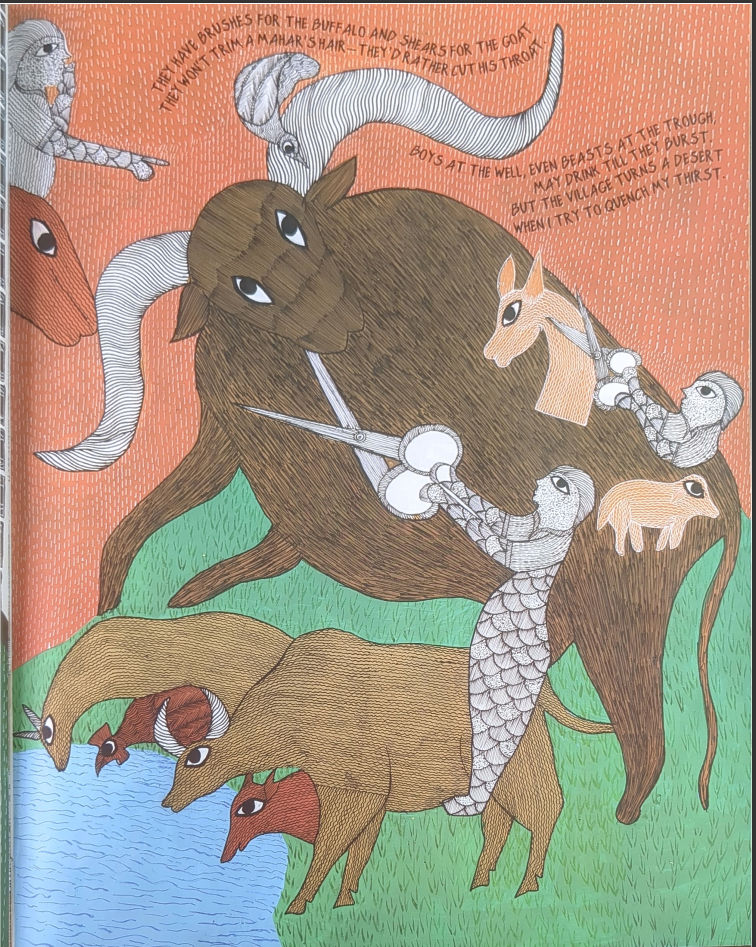 Most poignant page in the book that talks about the attack on human dignity one segment of people have had to face
When Bhim goes home and asks his mother why - why he cannot drink from the tap, cut his hair at the barber’s, have his clothes washed - she does not know how to answer. She has been living so long inside the answer that she has lost language for why it should be otherwise. She tells him to stop asking. She tells him he is lucky. She tells him not to say things that will get him into trouble.
We recognised something in this that was harder to name than the injustice of the tap. The resignation of someone who has had to carry the system’s weight for so long that it has become indistinguishable from the weather. The way oppression teaches people to protect themselves by accepting - by saying: at least. At least we are not worse off. At least we have come this far.
And against this, a ten-year-old boy who keeps asking. Who has not yet been taught to absorb injustice as given. Who says, with complete honesty: I am cleaner than them. So why?
Children do not accept simple-sounding things on faith. They keep asking. And the most simple-sounding injustices are often the most operatively harmful ones - precisely because they have been made to sound like nature.
The book held several pages we read in silence. Real events. Real families. Real years. What surfaced in that silence was not easy to name. There was grief in the room, and anger, and something that sat underneath both of them - the particular weight of a history that many of us had not been taught to carry, or had been taught to carry incorrectly.
Because one of the things the reading kept returning to was education, and what it does and does not do. Many of us had passed through schools that did not so much ignore caste as actively manage it - teaching the Varna system as an ancient arrangement of labour, without naming what it had produced. Presenting a sanitised story of the nation in which Ambedkar appeared as statues that outnumber Gandhi’s - but it is only the statues, the visual representation, that has proliferated. Not the ideas. His teachings, his politics, his urgent questions, remain largely outside the curriculum.
The session closed with Ambedkar’s own words: Educate, agitate and organize. Have faith in yourself. With justice on our side, I do not see how we can lose our battle. The battle, to me, is a matter of joy.
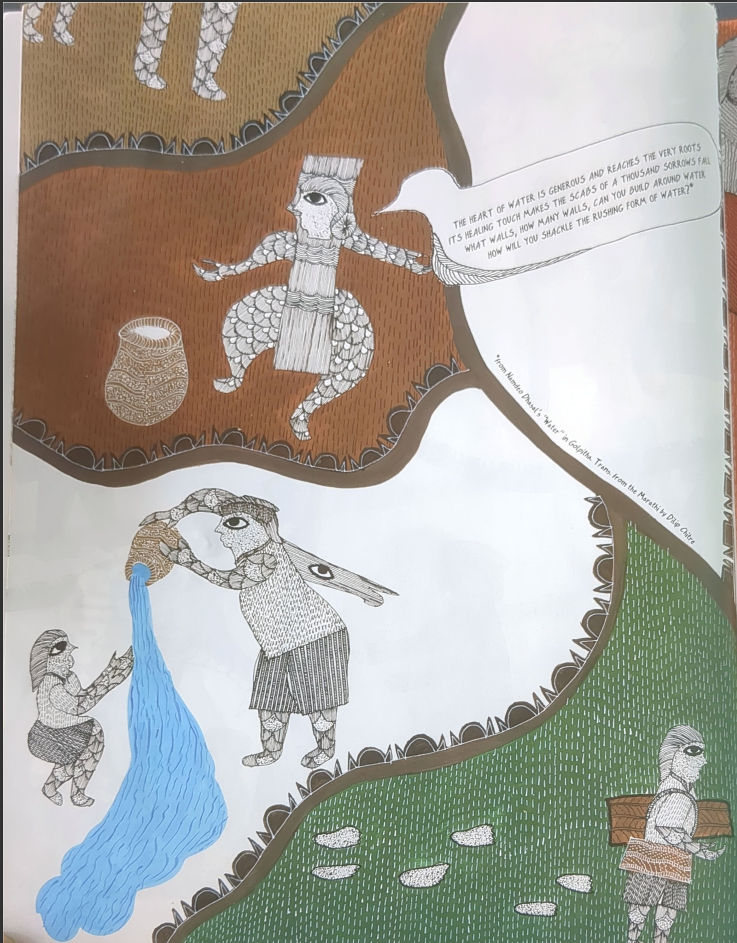 Justice like water will flow through all the barriers
That phrase - a battle as a matter of joy- held us for a moment. Not joy that denies the difficulty. But joy as the name for something that chooses to remain in the difficulty. That finds meaning in the choosing.
We were reminded that Ambedkar - this same boy who was refused water, refused a haircut, refused a seat with the other children - later passed legislation that led to the formation of the Central Water Commission, which governs how rivers are managed and how water reaches people across our country.
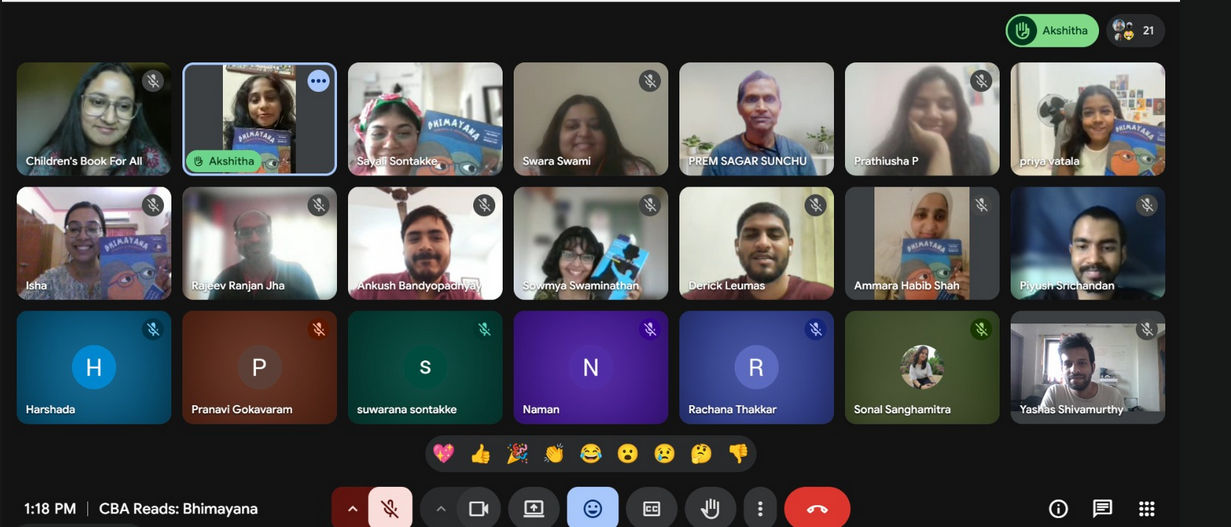 Holding on to hope and struggle
A reminder that struggles do lead to hope. And hope can be transformed into action.
Jai Bhim and Dosti Zindabad.
This reading was facilitated by Isha, Priya and Sayyali.
You can register for our upcoming readings here