Feelings we're never taught to name as boys
 Rajeev Ranjan Jha
  Book: The Noise Inside Boys
We met on 12 April to read The Noise Inside Boys to explore the side of boyhood that often goes unheard - the quiet confusions, the unspoken pressures, and the emotional worlds that rarely find language.
Something in the first page itself seemed to hold still for us before a single word was read. Two images placed side by side. Boys with arms raised in joy, sunlit, carefree. And their shadows - arms at their sides, something heavier in the way they fell across the sand.
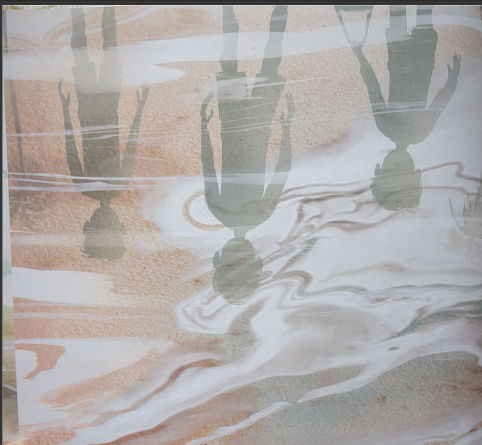 Us and our shadows
We found ourselves sitting with those two images for a while.
Most of us recognized them. The version of ourselves we learned to show. And the version that follows us home. In many of our lives, and in the lives of the boys we grew up alongside, the gap between those two images was never really spoken about. It was simply understood that the shadow was not the part you were supposed to show.
We show something outside. And we are someone inside.
As the story moved forward, we spent time with what happened when one boy’s sandcastle was broken. Two friends ran on. The boy sat alone beside the ruin.
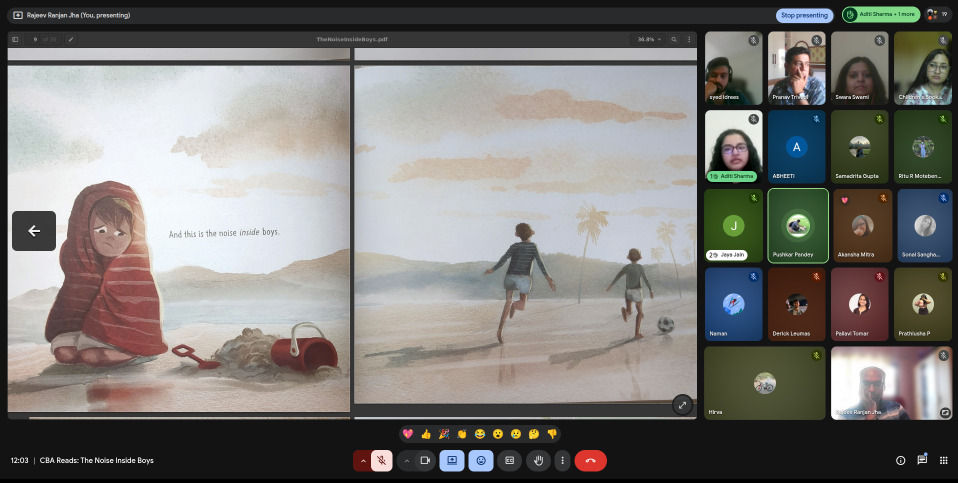 Experiencing a loss alone
This is where the reading seemed to slow for many of us.
Because what the book showed in that moment - quietly, without drama - was something many of us have experienced and rarely seen reflected back. The experience of feeling something deeply and finding no one staying in the room with it. The friends who move on not out of cruelty, but because they have never been given the language or the permission to remain. Grief unacknowledged. Loss that is expected to simply dissolve into the next game.
For boys especially, this pattern often begins early. The message arrives in small ways and large ones. Through how adults respond. Through what is celebrated. Through the particular silence that meets certain kinds of feeling. The message is rarely stated directly. It does not need to be.
Move on. Build another one. There are bigger things ahead.
And so they learn to move on. Long before they have any sense of what they are leaving behind.
What drew us most gently into the heart of the book was the father.
He comes home with his son. He sits on the bed of the boy’s room. He does not demand that the feelings stop, or that the boy perform recovery, or that the whole thing be placed in proportion. He simply stays. He breathes. And then he reaches out his hand.
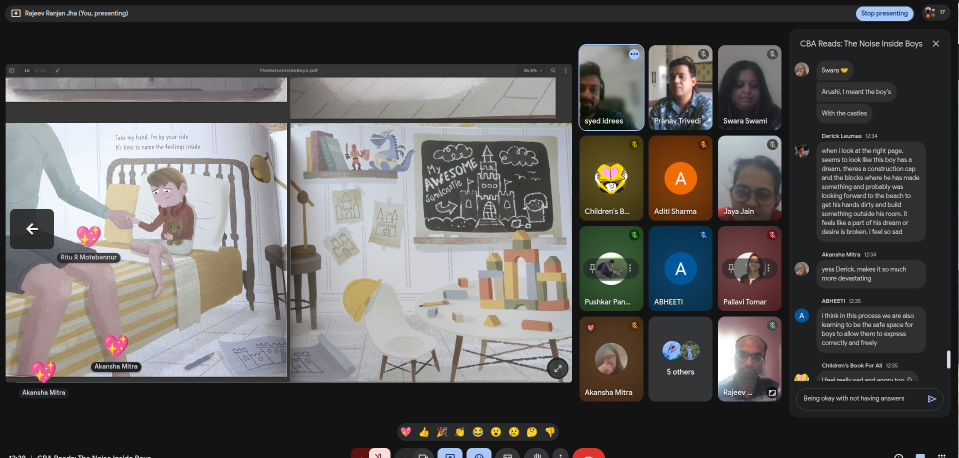 The hand seemed to reach out to all of us
During the reading this moment seemed to land in a particular way for many of us. Not only as a warm scene in a picture book. But as something close to a kind of longing.
Several of us found ourselves saying variations of the same thing. That this felt like a dream. That if someone had sat with us this way, it might have been so much lighter. Not easier. Not without difficulty. But lighter. As though the weight of unfelt feelings is not something we were meant to carry entirely alone.
What struck us was how rare this image was. Not just in stories - but in life.
A father who stays.
A father who asks.
A father who does not flinch.
For many of us, the men in our lives had not been given this either. Fathers who turned to work when feeling arrived. Fathers who responded to sadness with logic, to vulnerability with correction, to tears with the suggestion that tougher things were coming and one had better prepare. Not because they did not love. But because no one had ever sat beside them either.
The absence of role models does not end with one generation.
It travels.
Spending time with the story also drew our attention to the wider worlds in which boys grow into men. In many of our contexts, emotional expression carries meanings that reach far beyond the individual moment. It is entangled with ideas of strength, of masculinity, of what it means to be reliable and steady and worthy of respect.
Because of this, certain feelings have been more acceptable to carry openly. Anger, perhaps. Achievement, certainly. But tenderness, grief, confusion, loneliness - these have often found themselves met with hesitation. With redirection. With the quiet suggestion that they do not quite belong to the kind of person a boy is supposed to become.
What emerged in our conversation was something that surprised several of us. That even anger - supposedly the one emotion considered accessible to men - is, for many, not truly accessible at all. That what appears as anger is often grief or sadness that has found the only unlocked door. And that even that door is sometimes sealed. That many men have simply learned to go somewhere quiet and wait for the feeling to pass.
Safe spaces for big feelings are not something boys are routinely offered. And without them, feelings do not disappear. They become harder to locate. Harder to name. Harder, eventually, to feel at all.
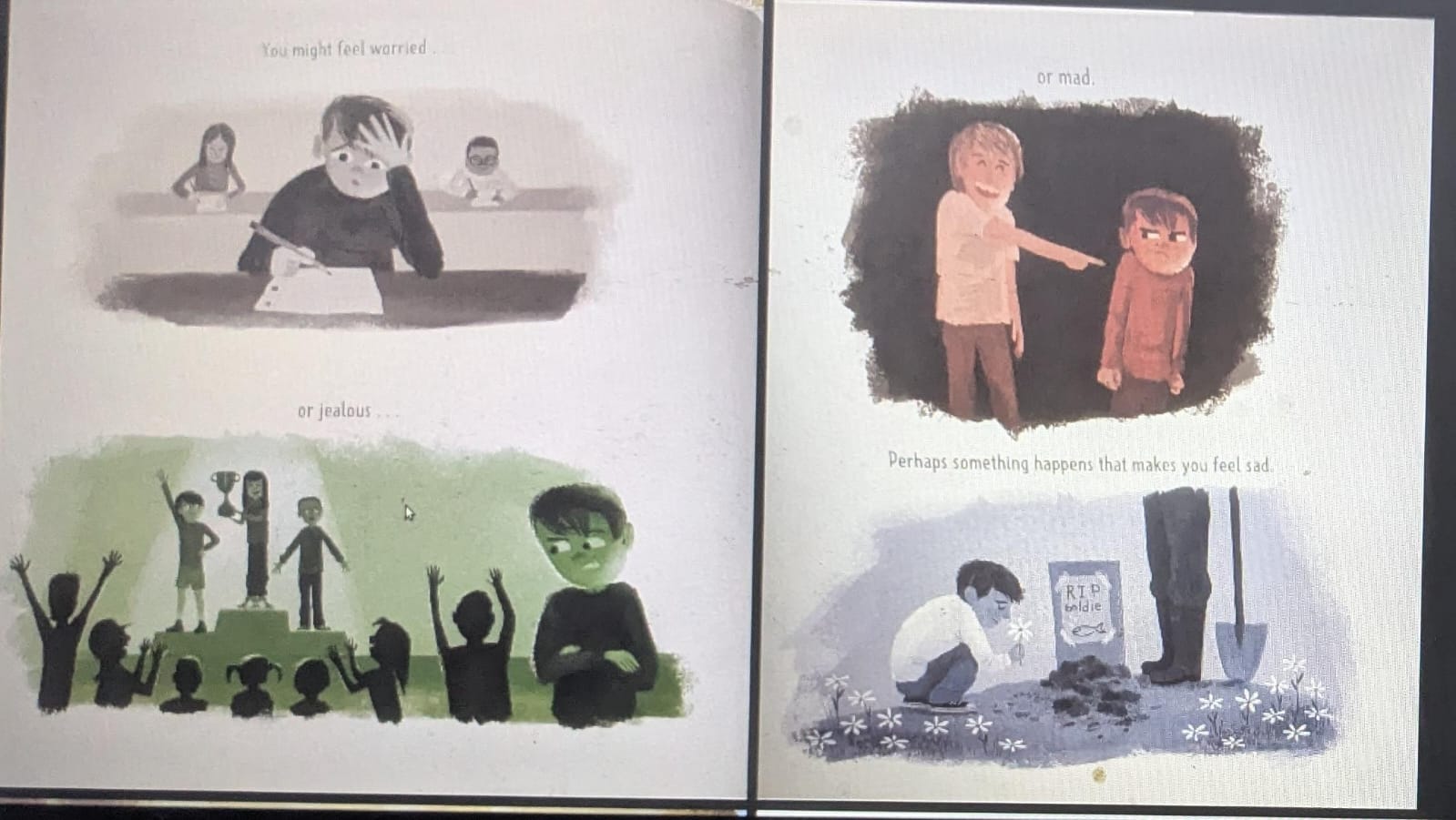 Creating safe space for all feelings to exist
This is where the book seemed to offer something quietly significant.
Not a solution. Not a set of instructions. But an image. A sustained and tender image of what it might look like when a boy is not left alone with what he feels. When someone - a parent, an adult, anyone - remains present long enough to say: what is happening inside you has a name, and that name makes it real, and it is valid, and you do not have to be alone with it.
The final pages of the book showed an entire wheel of feeling. Tired. Surprised. Proud. Lonely. Overwhelmed. Grateful. Hurt. A map of the interior, offered without judgment.
We noticed, in our reflection, how late in life many of us had encountered something like this. How long it had taken to even begin to develop a language for what moved through us. How much had been expressed sideways - through withdrawal, through anger, through the body, through the long habit of pretending the shadow was not there.
How can we break this intergenerational cycle of suppressing emotions?
Maybe we can choose to sit down beside someone and extend a hand.
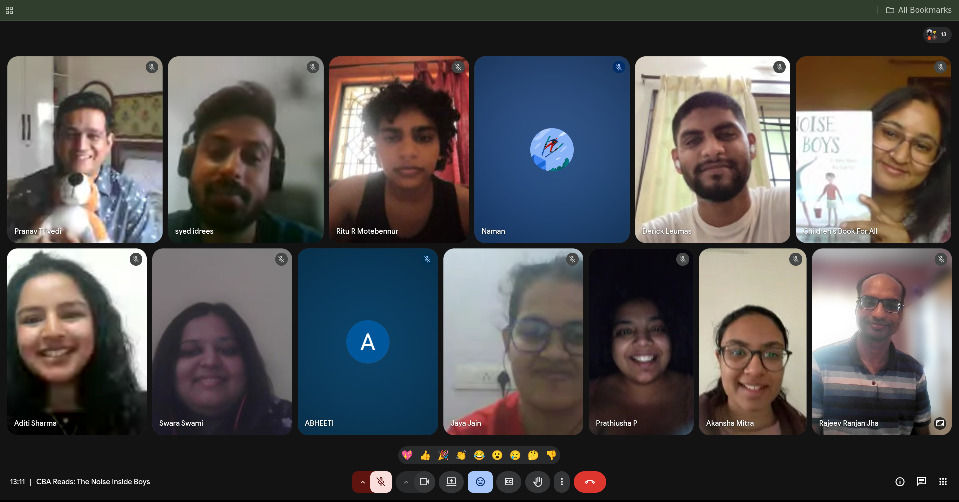 Choosing to express ourselves and choosing to lend a hand
This reading was facilitated by Pranav Trivedi and Syed Idrees.
You can register for our upcoming readings here